Kedarkantha vs Brahmatal Comparison Guide for Your Winter Trek
Trek Diaries

Kedarkantha vs Brahmatal Comparison Guide for Your Winter Trek

Quick answer: Choose the Kedarkantha trek if this is your first winter trek and you want a shorter trip with a real summit: 5 days from Dehradun, about 20 km on foot and a top at 12,500 ft. Choose the Brahmatal trek if you want frozen lakes, long ridge walks facing Mt Trishul and Nanda Ghunti, and a quieter trail, and you can give it 6 days. Both are easy to moderate snow treks for fit beginners.

The two treks reach almost the same height, only 250 ft apart, so the real choice is not about altitude. It comes down to where the hard work sits, what you want to see, how many days you can take off and how far you are ready to drive.

All trek facts below come from our Kedarkantha and Brahmatal trek pages. Temperatures are approximate and change from year to year, so check the forecast before you travel.

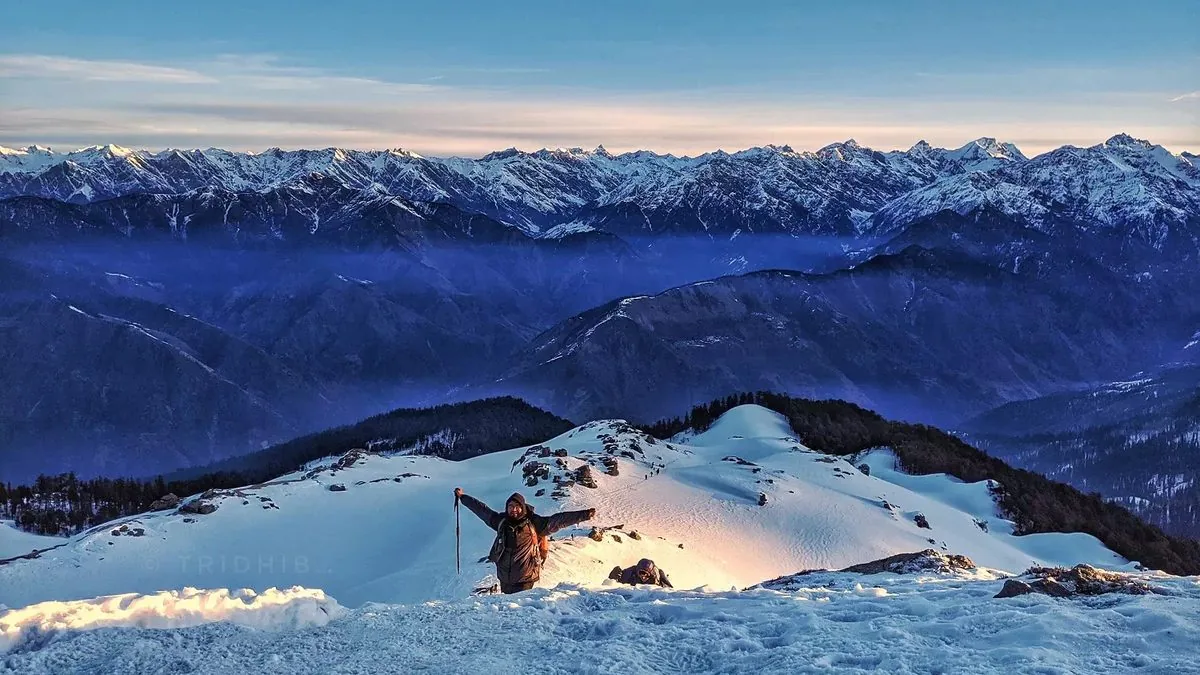
Trekker on the snowy Kedarkantha summit at sunrise, with a long line of Himalayan peaks on the horizon

Kedarkantha vs Brahmatal at a Glance

Detail Kedar­kantha Brahmatal
Height Summit
12,500 ft (3,810 m)
Brahmatal Top
12,250 ft (3,734 m)
Days 5, Dehradun to Dehradun 6 from Dehradun
On foot 4 days, about 20 km 4 days
Base Sankri
190 km from Dehradun
Lohajung, about 7,600 ft
290 km from Dehradun
Drive 8 to 9 hours each way 10 to 11 hours each way
Area Govind Wildlife Sanctuary, Uttarkashi Chamoli district
Grade Easy to moderate Easy to moderate
Best for Summit sunrise, Juda Ka Talab (9,100 ft) Bekaltal and Brahmatal lakes, Trishul views
Snow Dec to Mar Dec to Feb, patches into Mar
Fee ₹10,000 + 5% GST ₹11,200 + 5% GST
Group Maximum 12 Maximum 12

The extra day on Brahmatal is mostly road time, not trail time. Both treks have four days on foot, but Lohajung is about 100 km further from Dehradun than Sankri, so Brahmatal needs a full day of driving at each end.

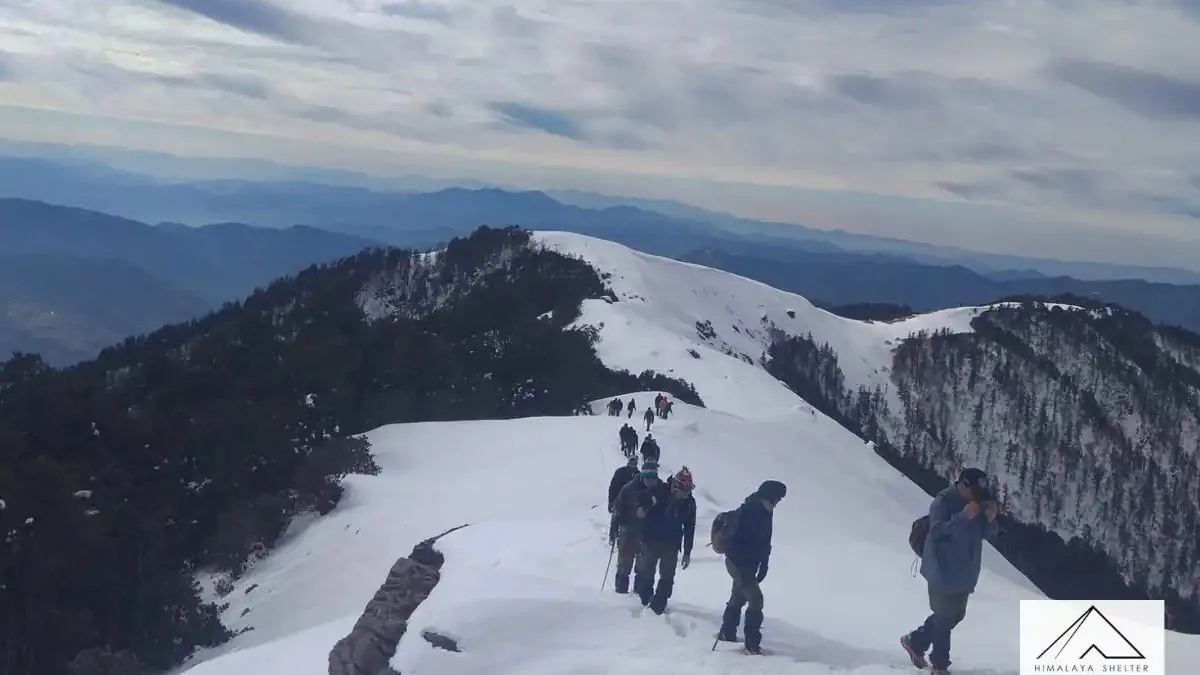
Trekkers in a line walking down a snow-covered ridge on the Brahmatal trek, with forested hills and cloudy sky around them

Which Is Harder: Kedarkantha or Brahmatal?

Both trek pages grade the routes easy to moderate, and neither needs technical climbing. The difference is where the hard work sits.

Kedarkantha: short days and one big summit morning

The first two walking days are short, 2 to 4 hours each. Then summit day asks for everything at once: you start in the dark, climb a steep, exposed slope on snow to 12,500 ft and walk back down to Juda Ka Talab, about 8 km in 7 to 8 hours. Wind and cold on the summit ridge make it the toughest morning of the trek.

Brahmatal: steady effort over four days

Brahmatal has no single steep summit push, which is why our Brahmatal page rates it slightly easier than Kedarkantha. Instead, the ridge walk rises and drops several times, and the last day is a long descent to Lohajung. Hard snow can be slippery, so microspikes go on for the steep sections.

Day Kedar­kantha Brahmatal
Day 1 Drive to Sankri
8 to 9 hours
Drive to Lohajung
10 to 11 hours
Day 2 To Juda Ka Talab
3 to 4 hours
To Gujreni
4 to 5 hours
Day 3 To base camp
2 to 3 hours
To Tilandi
3 to 4 hours
Day 4 Summit, back to Juda Ka Talab
7 to 8 hours
Over Brahmatal Top to the lake
6 to 7 hours
Day 5 Down to Sankri, 2 to 3 hours
Drive to Dehradun
Down to Lohajung
7 to 8 hours
Day 6 Not needed Drive to Dehradun

Our view: if you can walk 4 to 6 hours a day on hill trails, you can do either trek. Kedarkantha suits you if you can push hard for one morning; Brahmatal suits you if you prefer steady days.

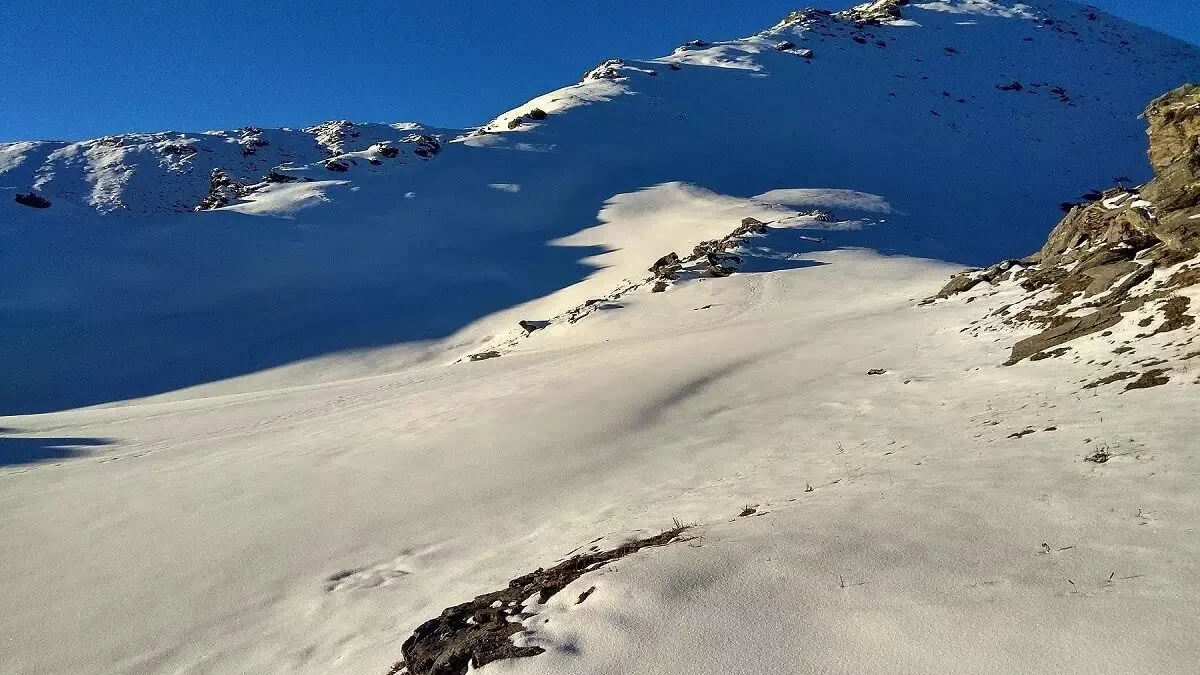
Wide snow slope rising to Kedarkantha peak under a clear blue sky, the steep final climb of summit day

Snow and Best Months: Kedarkantha or Brahmatal in December and January

Both are true snow treks, and both stay open through winter, when most high trails in Uttarakhand close.

Kedarkantha: the first snow usually falls in late November or early December, and by mid-December it normally covers the trail up to the base camp. January gets the heaviest snowfall, and snow stays until March. Juda Ka Talab freezes in December and starts to melt in February.

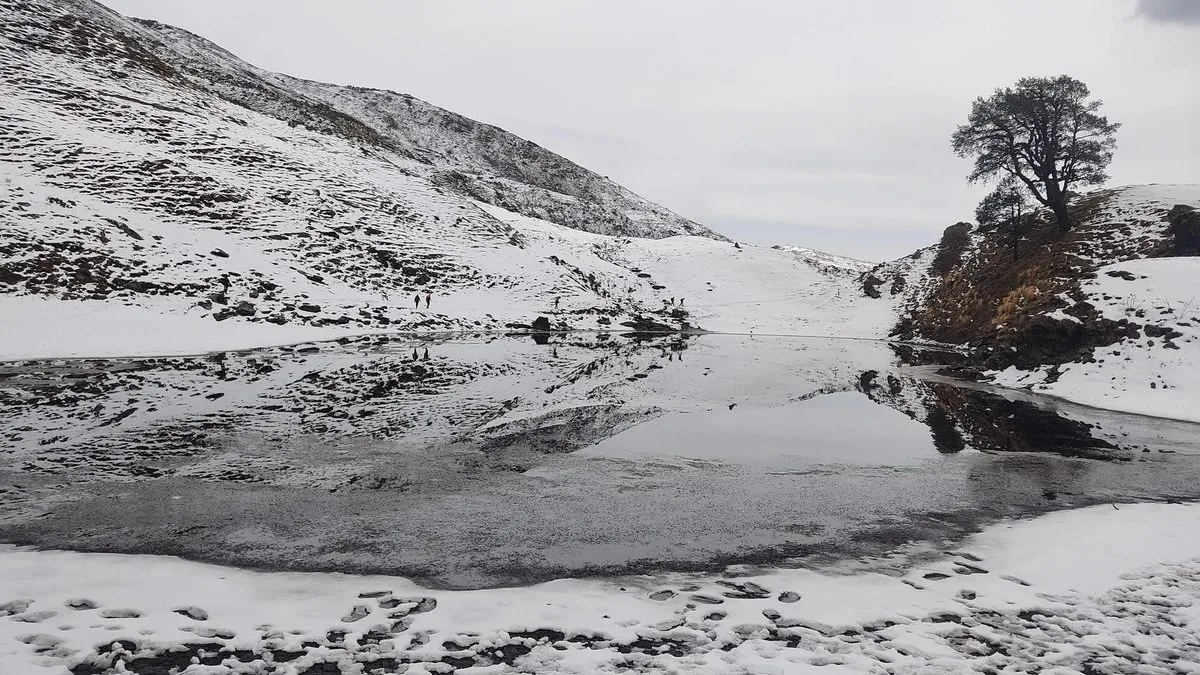
Brahmatal: snow collects first on the upper ridges in December, then works down through the forest. In January it can cover the trail from the first day, and Bekaltal and Brahmatal lake are often partly or fully frozen.

Month Kedar­kantha Brahmatal
Oct and Nov Clear views; first snow possible in Nov Clearest views; first snow possible late Nov
Dec Snow up to base camp by mid-month Snow builds on the upper ridges
Jan Heaviest snowfall Coldest month; lakes often frozen
Feb Snow above base camp; milder days Good snow cover; fresh snowfall
Mar Good snow, warmer days Snow on the ridges only

Avoid the monsoon on both treks: July and August on Kedarkantha, and July to September on Brahmatal.

If snow is your main goal, late December to February is the safest window on both treks. For snow with fewer people, aim for mid-January to February.

Brahmatal lake partly frozen, with snow on its banks and a lone tree on the slope above it in winter

Kedarkantha vs Brahmatal Temperature in Winter

Neither trek is warmer in any way that changes your packing. Both have freezing nights from December to February, and January is the coldest month on both.

Winter Kedar­kantha Brahmatal
Day About 5 to 15°C on the lower trail About 0 to 10°C
Night at camp 0 to -5°C at Juda Ka Talab; -10°C or lower at base camp About -5 to -12°C
Coldest month January January

The Brahmatal daytime range looks lower partly because it is measured around the campsites (roughly 9,000 to 10,500 ft), while the Kedarkantha figure is for the lower trail. Both summits feel much colder in the wind. Plan for nights of about -10°C on either trek.

For month-by-month numbers, read our Kedarkantha temperature and weather guide and our Brahmatal temperature and weather guide.

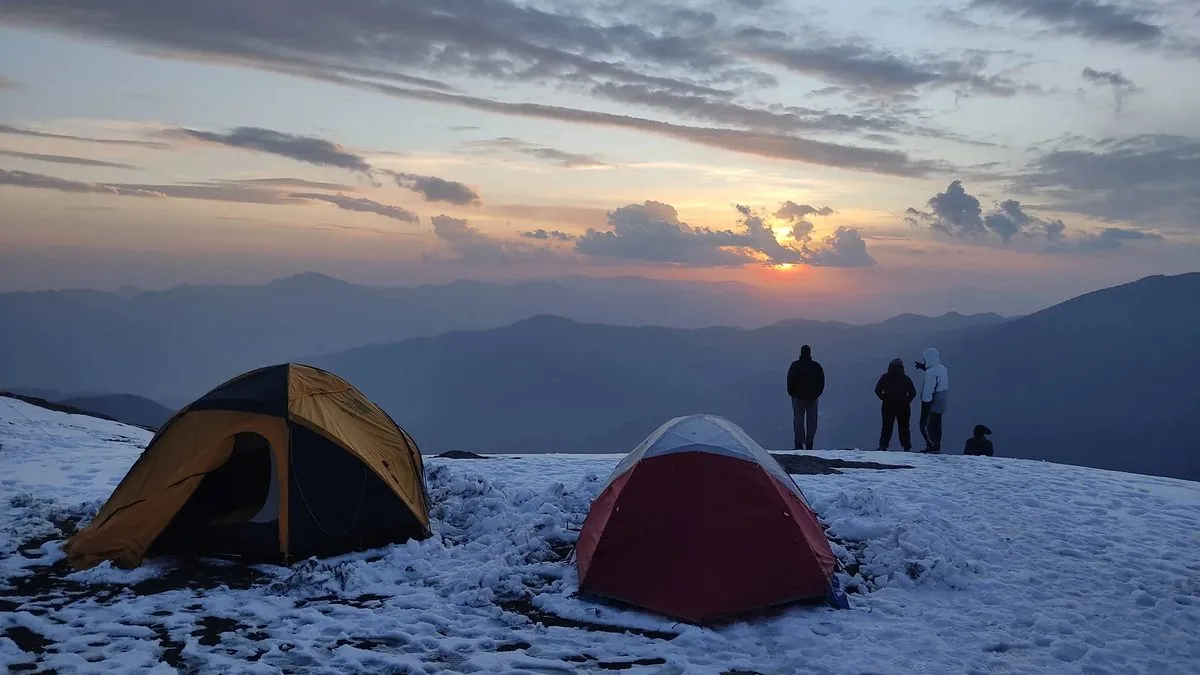
Two tents on snow at a Brahmatal campsite at sunset, with trekkers watching the light fade as the temperature drops

Views: Summit Panorama or Lakes and Big Peaks

Kedarkantha is a summit trek. The big moment is sunrise on top, with a 360-degree view that takes in Swargarohini, Black Peak, Bandarpoonch, Ranglana and the Gangotri and Yamunotri ranges. Before that, the trail climbs through pine and oak forest to Juda Ka Talab, a small lake that freezes in deep winter, and then to open snow slopes below the summit.

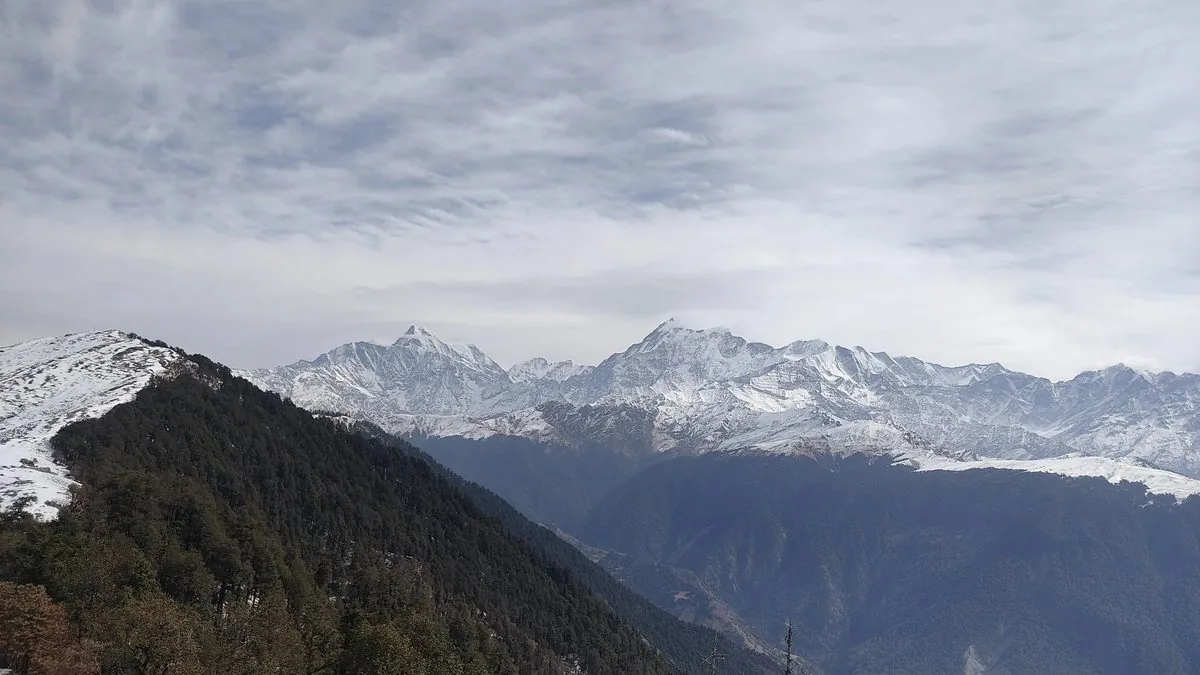
Brahmatal is a lake and ridge trek. You pass two high lakes, Bekaltal and Brahmatal, walk through old oak and rhododendron forest, and spend long stretches on open ridges facing Mt Trishul and Nanda Ghunti. From Brahmatal Top on a clear day, Chaukhamba and more peaks of the Garhwal Himalaya join the view.

In short, Kedarkantha gives you one big summit morning; Brahmatal gives you mountain views for much of the trek.

Snow-capped Himalayan peaks rising above dark forested ridges, seen from the Brahmatal trek on a cloudy winter day

Getting There from Dehradun and Delhi

Both treks start with a pickup at Prince Chowk in Dehradun, near the railway station.

  • Kedarkantha: Sankri is 190 km from Dehradun, about 8 to 9 hours by road via Mussoorie, Purola and Mori. On the last day you walk down to Sankri and drive back the same day, reaching Dehradun by about 6:30 pm.
  • Brahmatal: Lohajung is about 290 km from Dehradun, a 10 to 11 hour drive via Rishikesh, Devprayag and Karnaprayag. You spend the night of day 5 back in Lohajung and drive to Dehradun on day 6.
  • From Delhi: Dehradun is about 5 to 6 hours by road (direct buses from Kashmiri Gate ISBT) or about 6 hours by train. If you are flying in, reach Dehradun a day early, as the pickup is in the early morning.
  • Phone and power on Brahmatal: Vi, BSNL and Airtel work at Lohajung, but there is no electricity beyond the base village, so carry a power bank.

Crowds on the Trail

Kedarkantha is one of the most popular winter treks in India, and the Christmas and New Year weeks are its busiest time. Brahmatal gets better known every year, but it usually sees fewer trekkers than Kedarkantha.

Himalaya Shelter keeps every group to a maximum of 12 trekkers on both treks. For quieter trails, avoid the last week of December and go between mid-January and February.

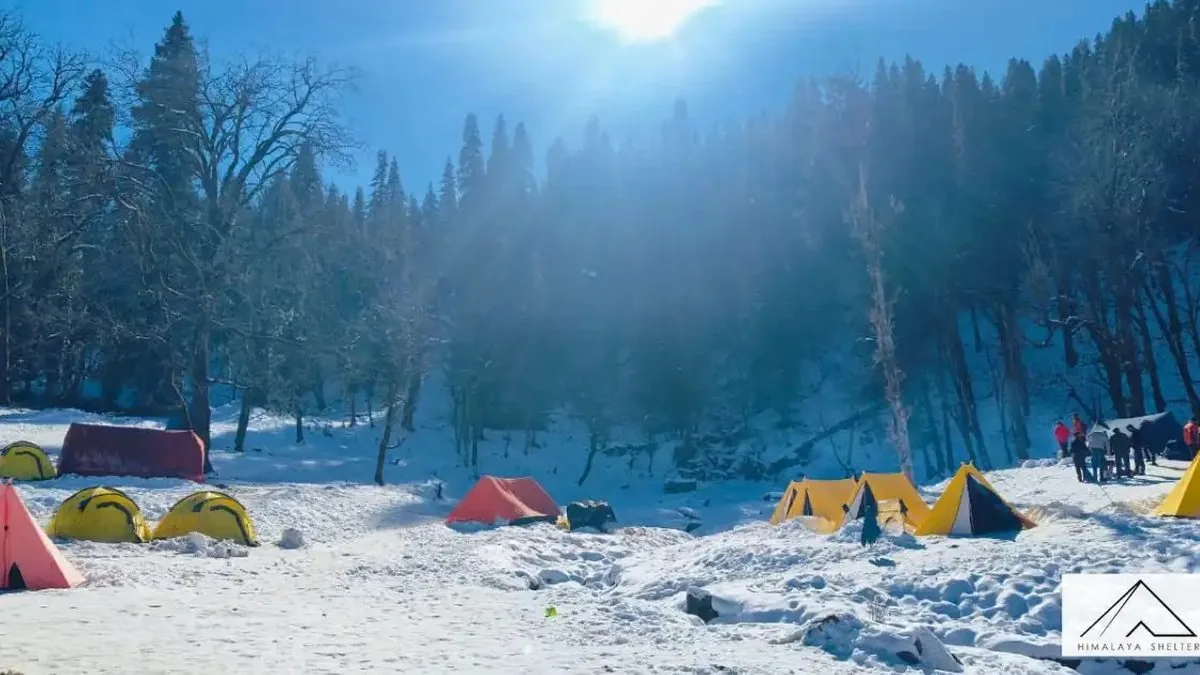
Colourful tents spread across a snowy Kedarkantha campsite among tall pine trees on a bright winter morning

Kedarkantha vs Brahmatal Cost and What Is Included

The Kedarkantha trek is ₹10,000 + 5% GST per person, and the Brahmatal trek is ₹11,200 + 5% GST per person, as listed on our trek pages in October 2026. Brahmatal costs a little more, and it is also one day longer.

On both treks, the fee includes:

  • A night at the base village in a guesthouse or homestay, and 2-person tents on the trek
  • Winter sleeping bags and foam mattresses
  • Microspikes and gaiters for snow, with an ice axe and helmets
  • Breakfast, packed lunch on trek days, evening snacks and dinner (vegetarian, with egg)
  • An AMC-certified trek leader, local guides and kitchen staff
  • A full medical kit and oxygen cylinders
  • Forest entry charges for Indian nationals

Not included on either trek: the mandatory trek insurance fee, personal gear such as jackets and shoes (rentable from our store), backpack offloading and your travel to Dehradun. Check the trek page for the latest fee and transport details before you book.

Which Trek Should You Choose?

Choose Kedarkantha if

  • This is your first Himalayan trek, or your first time on snow
  • Your leave is short and you want a shorter drive
  • You want a real summit and a sunrise from the top
  • You are going over Christmas or New Year and want the classic winter trek

Choose Brahmatal if

  • You want frozen lakes and long ridge walks facing Mt Trishul
  • You prefer steady days to one steep summit climb
  • You want a quieter trail
  • You have done Kedarkantha and want a second snow trek

Still unsure? Do one this winter and the other next winter. On either trek, people with heart or breathing conditions should check with a doctor first.

What to Pack for Kedarkantha or Brahmatal

The packing list is the same for both, because the nights are equally cold:

  • Four upper layers: thermal, fleece, padded or down jacket, and a windproof, waterproof outer shell
  • Thermal bottoms and trekking pants
  • Woollen cap, buff or balaclava, and inner and waterproof outer gloves
  • Two pairs of thick woollen socks and trekking shoes with good grip
  • Headlamp, sunglasses, sunscreen, lip balm and a power bank
  • Two water bottles; keep one inside your sleeping bag at night so it does not freeze

Tents, sleeping bags, microspikes and gaiters are provided, and jackets and other gear can be rented from our store.

Final Thoughts

Kedarkantha and Brahmatal are both excellent first snow treks. Choose Kedarkantha for a shorter trip and a summit sunrise, and Brahmatal for frozen lakes, Trishul views and quieter trails.

When you have decided, check the dates on the Kedarkantha trek page or the Brahmatal trek page, and book early if you want the Christmas or New Year week.

Frequently Asked Questions

Which is better, Kedarkantha or Brahmatal?

Neither is better for everyone. Kedarkantha suits first-time winter trekkers who want a shorter 5-day trip and a summit at 12,500 ft. Brahmatal suits trekkers who want frozen lakes, ridge views of Mt Trishul and Nanda Ghunti and a quieter trail over 6 days. Both are easy to moderate snow treks.

Is Brahmatal easier than Kedarkantha?

Slightly, for most people. Brahmatal has no steep summit push, so the effort is spread over four steady days, although its last day is a long 7 to 8 hour descent. Kedarkantha has shorter days but one hard summit morning: a steep climb on snow to 12,500 ft in a 7 to 8 hour day.

Which is better for beginners, Kedarkantha or Brahmatal?

Both work for fit beginners who can walk 4 to 6 hours a day. Kedarkantha is the classic first winter trek, with a shorter drive and short days before summit day. Brahmatal suits beginners who prefer steady days without a steep summit and can spare 6 days.

Which has more snow in December and January?

Both have good snow from late December to February. On Kedarkantha, snow normally reaches the base camp by mid-December, and January gets the heaviest snowfall. On Brahmatal, snow builds on the ridges in December, and by January it can cover the trail from the first day, with the lakes often frozen.

Which is colder, Kedarkantha or Brahmatal?

They are about equally cold. Winter nights at Kedarkantha are 0 to -5°C at Juda Ka Talab and -10°C or lower at the base camp, while Brahmatal campsites are about -5 to -12°C. January is the coldest month on both, so pack for nights of about -10°C on either trek.

What is the cost of Kedarkantha vs Brahmatal?

With Himalaya Shelter, the Kedarkantha trek costs ₹10,000 + 5% GST per person for 5 days, and the Brahmatal trek costs ₹11,200 + 5% GST per person for 6 days. Both include tents, sleeping bags, microspikes, gaiters, meals on the trek and a trained trek leader. Trek insurance is extra.

Which is less crowded, Kedarkantha or Brahmatal?

Brahmatal is usually quieter. Kedarkantha is one of the most popular winter treks in India and is busiest over Christmas and New Year. For quieter trails on either trek, go between mid-January and February. Himalaya Shelter keeps every group to a maximum of 12 trekkers.