Brahmatal vs Dayara Bugyal Comparison Guide for Your Winter Trek
Trek Diaries

Brahmatal vs Dayara Bugyal Comparison Guide for Your Winter Trek

Quick answer: Choose the Dayara Bugyal trek if you want the gentler snow trek: wide white meadows, a shorter drive from Dehradun (185 km) and no steep summit climb. Choose the Brahmatal trek if you want frozen lakes, long snow ridges facing Mt Trishul and Nanda Ghunti, and a slightly higher top at 12,250 ft. Both take 6 days from Dehradun, both are easy to moderate, and both stay open through winter.

On paper the two treks look almost identical. Both start with a pickup in Dehradun, both spend four days on foot, and their highest campsites are only 20 ft apart. So the real choice is not about altitude. It comes down to the scenery you want, where the hard days fall, and how many hours you are happy to spend on mountain roads. This guide compares them point by point.

By Manish Barakoti, Himalaya Shelter. Trek facts are from our Brahmatal and Dayara Bugyal trek pages and temperature guides, checked in October 2026. Snow and temperatures change every year, so check the forecast before you travel. Last updated: October 2026.

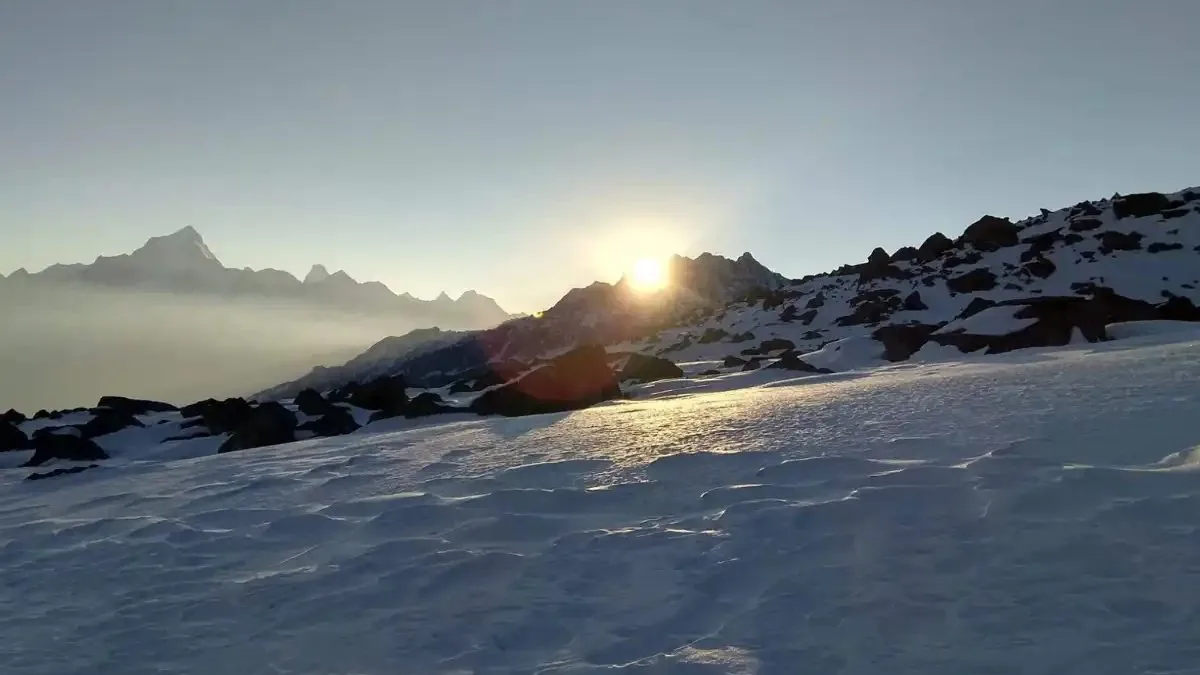
Sun rising behind a rocky snow ridge on the Brahmatal trek, with a line of Himalayan peaks on the left horizon

Sunrise over the snow on the Brahmatal trail.

Brahmatal vs Dayara Bugyal at a Glance

Detail Brahmatal Dayara Bugyal
Area Chamoli district Uttarkashi district
Top Brahmatal Top
12,250 ft (3,734 m)
Dayara Top
about 11,950 ft (3,640 m)
Days 6 from Dehradun 6 from Dehradun
On foot 4 days 4 days, about 21 km
Base Lohajung, about 7,600 ft Raithal, 7,142 ft
Drive 290 km
10 to 11 hours
185 km
8 to 9 hours
Top camp Tilandi, 10,495 ft Chilapada, 10,515 ft
Grade Easy to moderate Easy to moderate, the gentler one
Known for Two lakes, ridge walks, Trishul views Snow meadows, Gangotri range views
Snow Dec to Feb, patches into Mar Late Dec to Mar
Fee ₹11,200 + 5% GST ₹11,299 + 5% GST, transport ₹2,000 extra
Group Maximum 12 Maximum 12

Brahmatal Top is only about 300 ft higher than Dayara Top, and you sleep at almost the same height on both. Dayara actually climbs a little more in total, about 4,800 ft from Raithal to the top, against about 4,650 ft from Lohajung to Brahmatal Top. The bigger differences are the shape of the trail, the views and the length of the drive.

Which Is Easier: Brahmatal or Dayara Bugyal?

Both treks are graded easy to moderate, neither needs technical climbing, and on both we provide microspikes and gaiters for hard snow. Even so, Dayara Bugyal is the gentler of the two. Its trail climbs gradually through forest and then opens onto wide meadows, while Brahmatal has steeper forest sections and a few steep stretches near the summit ridge.

Walking day Brahmatal Dayara Bugyal
Day 2 Lohajung to Gujreni
4.5 km, 4 to 5 hrs
Raithal to Gui
5 km, 4 to 5 hrs
Day 3 To Tilandi
3 km, 3 to 4 hrs
To Chilapada
2.5 km, 2 to 3 hrs
Day 4 Via Brahmatal Top
5.5 km, 6 to 7 hrs
Via Dayara Top
9.5 km, 6 to 7 hrs
Day 5 Down to Lohajung
8.5 km, 7 to 8 hrs
Down to Raithal
4 km, 4 to 5 hrs

Dayara Bugyal: one long day on open meadows

The first two walking days on Dayara are steady and short. Day 3, Gui to Chilapada, is only 2.5 km, which gives your body time to adjust before the big day. Summit day is the long one: 9.5 km from Chilapada over Dayara Top and down to Nayanta. The climb is gradual, but fresh snow slows everyone down, so the day takes 6 to 7 hours. After that, the walk out to Raithal is a short 4 km. Our Dayara page gives a simple fitness test: if you can walk 5 km in about an hour without stopping, you are ready.

Brahmatal: steeper forest climbs and two long days in a row

Brahmatal's day 3 is short in distance but climbs steeply through oak and rhododendron forest to Tilandi. Day 4 follows a ridge over Brahmatal Top for 6 to 7 hours, and day 5 is the longest of either trek: an 8.5 km descent to Lohajung that takes 7 to 8 hours. Long descents on packed snow are hard on the knees, so trekking poles help. Plan to walk 6 to 8 km a day on mountain trails.

Age is less of a barrier than many people think. From the reviews on our trek pages: in March 2026, five experienced trekkers aged 70 to 75 completed Brahmatal with us and camped on snow at Tilandi, and on Dayara, a family of four with two school-age sons chose it as their first Himalayan trek.

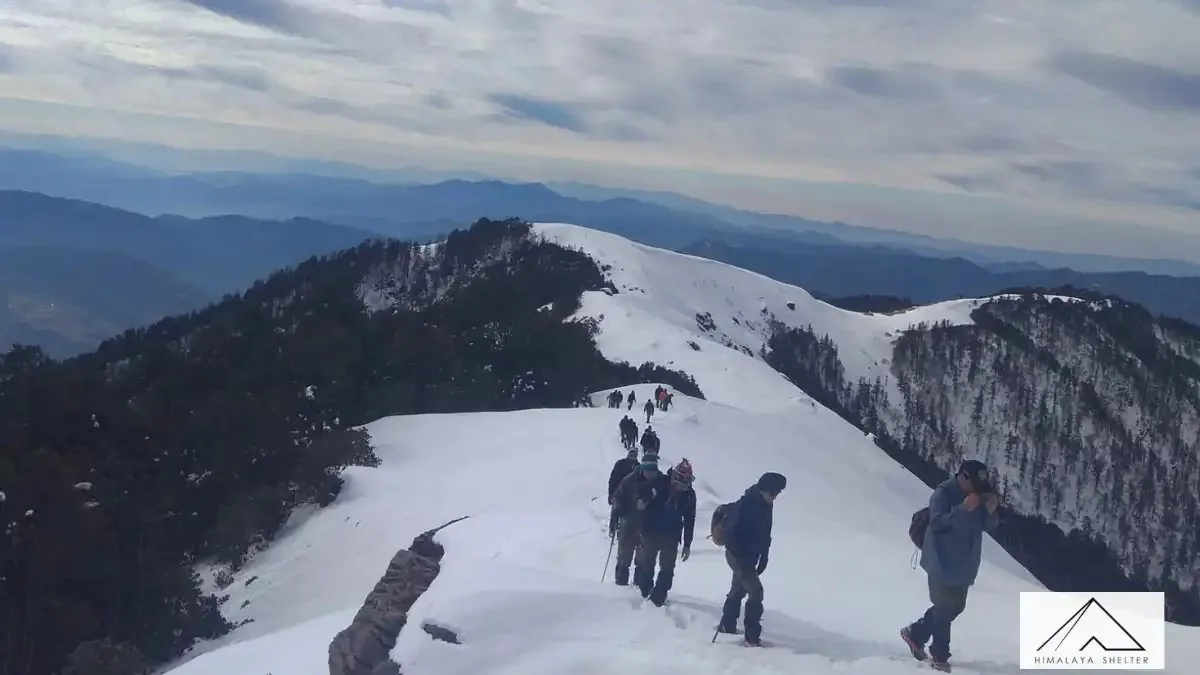
Group of trekkers with poles climbing a snow-covered ridge on the Brahmatal trek, with forested slopes on both sides

A Himalaya Shelter group on a snow ridge on Brahmatal.

Snow and Best Months: Brahmatal or Dayara Bugyal in December and January

Snow reaches both treks at about the same time, but it settles in different places first. On Brahmatal it collects on the high ridges near Brahmatal Top and then works down through the forest. On Dayara the first falls usually leave patches near Dayara Top before the whole meadow turns white.

Period Brahmatal Dayara Bugyal
Early Dec Light snow on the high ridges First snowfall; patches near Dayara Top
Mid to late Dec Snow settles on the upper trail; lakes start to freeze Meadows mostly white by late Dec
January Snow on most of the trail; lakes often frozen Meadows white; knee-deep after fresh snow
February Fullest snow cover Usually the most snow
March Melting lower down; patches near the top Melting; patches above Chilapada

If snow is the main goal, late December to February is the safest window on both treks. For a frozen lake, choose Brahmatal in January or February; the lakes sometimes freeze from late December. For the deepest snow on open slopes, choose Dayara in February. December suits a first snow trek on either, as the nights are slightly milder than in January. No one can promise snow on a fixed date, so keep your plans flexible.

Snow lying across the Dayara Bugyal meadow and the edge of the forest in winter, with bare trees and a ridge behind

Snow on the Dayara Bugyal meadow and the forest edge in winter.

Brahmatal vs Dayara Bugyal Temperature in Winter

Because the highest camps sit at almost the same height, Tilandi at 10,495 ft and Chilapada at 10,515 ft, the nights feel very similar. The figures below are approximate night temperatures at the campsites, from our two temperature guides.

Month Brahmatal nights Dayara nights
December -5 to -10°C -5 to -10°C
January -8 to -12°C -5 to -10°C, below -10°C on the coldest nights
February -6 to -10°C -5 to -10°C
March -3 to 2°C -3 to 2°C

Winter days on the Dayara trail are about 5 to 10°C. On Brahmatal they are about 2 to 10°C in December and 0 to 8°C in January. In both places, wind decides how cold it really feels: Brahmatal's summit ridge and Dayara's open meadow have little shelter. Pack the same warm layers for either trek. For month-by-month figures, read the Brahmatal temperature and weather guide and the Dayara Bugyal temperature and weather guide.

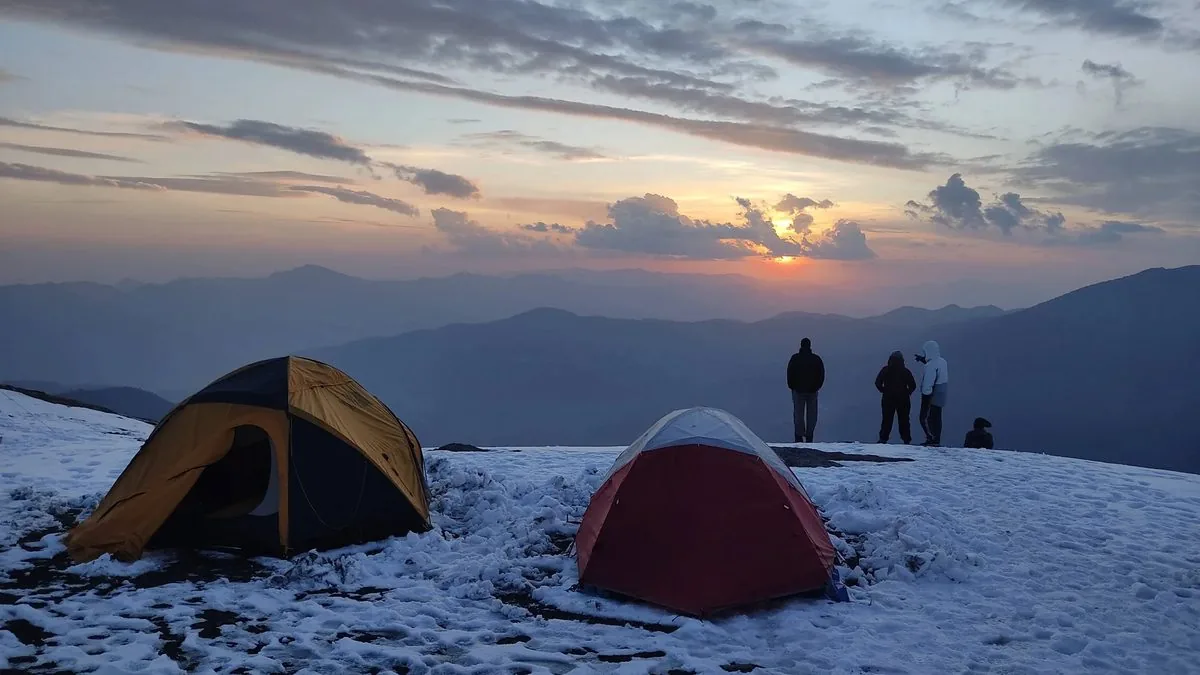
Two trekking tents pitched on snow at a Brahmatal campsite at sunset, with trekkers watching the sky over the hills

Tents on snow at a Brahmatal campsite as the sun sets.

See Brahmatal and Dayara Bugyal batches, cost and inclusions: the winter dates, the day-by-day plan and everything the fee covers are on our Brahmatal trek page and Dayara Bugyal trek page. Sending an enquiry needs no payment.

Views: Frozen Lakes and Trishul, or Meadows and the Gangotri Range

Brahmatal: two lakes and a big Garhwal panorama

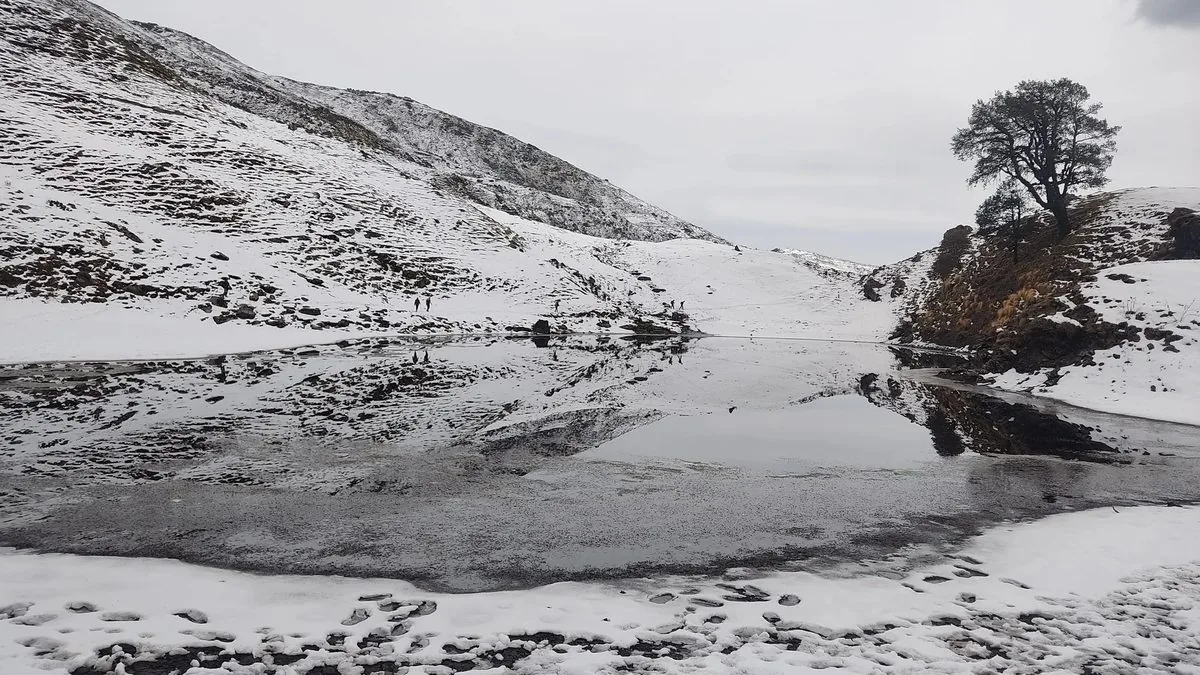
Brahmatal is a lake and ridge trek. On day 2 you pass Bekaltal, a quiet lake hidden in oak forest, and on day 4 you camp beside Brahmatal lake, which is partly or fully frozen in the coldest weeks. Mt Trishul and Nanda Ghunti are in view almost from the start at Lohajung. From the ridge and Brahmatal Top, the panorama widens to Chaukhamba, Neelkanth, Kamet and Hathi-Ghoda on clear days. The ridge near Jhandi Top is one of the best sunset spots on the trail.

Brahmatal lake in winter with snow on its banks and a lone oak tree on a small rise above the still water

Brahmatal lake in winter, with its lone oak on the bank.

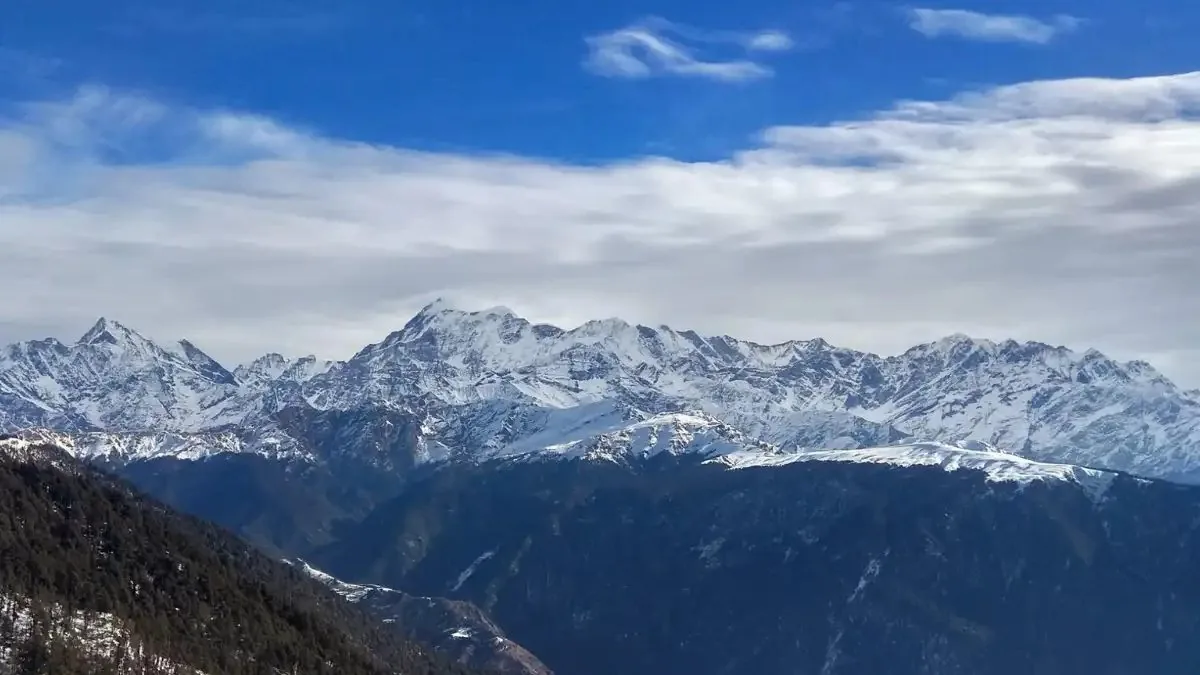
Snow-covered Himalayan peaks above forested ridges seen from the Brahmatal trail under a blue sky

Snow peaks seen from the Brahmatal trail on a clear winter day.

Dayara Bugyal: open meadows facing the Gangotri peaks

Dayara is a meadow trek. Above Chilapada the forest ends and the bugyal (high meadow) rolls up from about 10,500 ft to Dayara Top. In winter it becomes one wide snowfield. Looking north-east, you see Bandarpoonch, Black Peak (Kalanag), Srikanth, Draupadi ka Danda, Jaonli and the Gangotri peaks. Lower down, the trail passes oak, rhododendron and deodar forest, the shepherd huts at Gui and a small lake, Gui Taal, near the first camp. If you love big open spaces more than lakes, Dayara will feel freer.

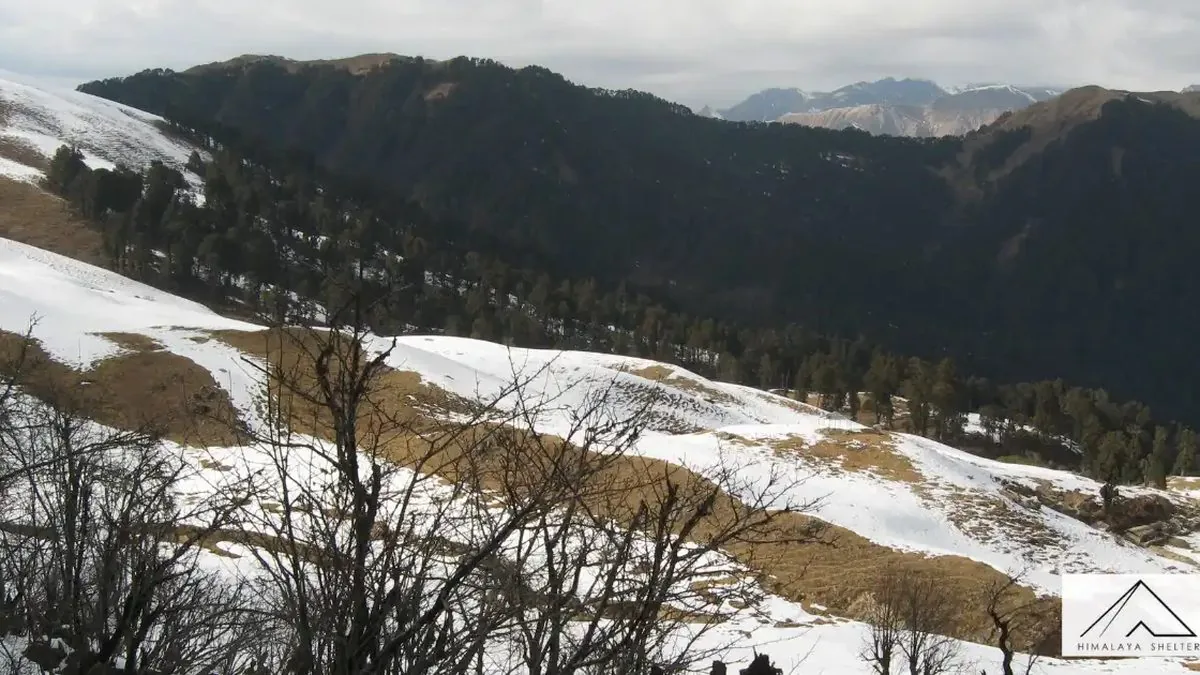
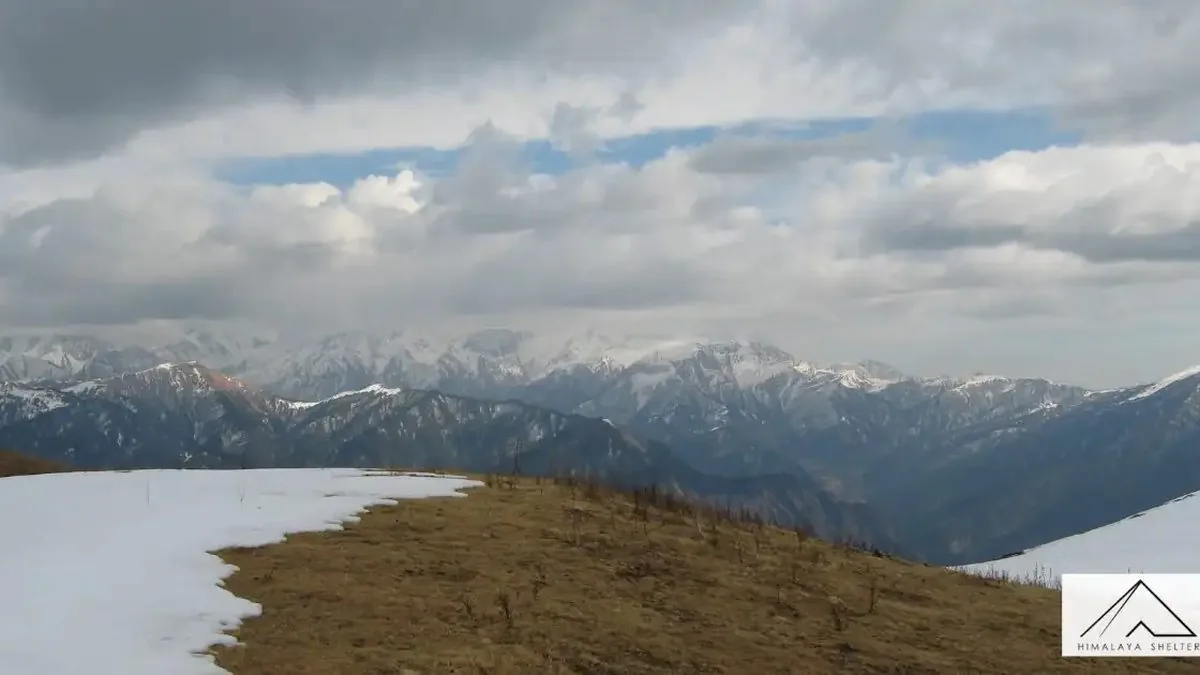
Edge of the Dayara Bugyal meadow with melting snow and brown grass, facing a long range of snow-capped peaks under clouds

The Dayara meadow looks out at a long line of snow peaks.

Getting There from Dehradun and Delhi

Both treks begin with a morning pickup in Dehradun, near the railway station. From Delhi, take a direct bus from Kashmiri Gate ISBT (about 5 to 6 hours) or a train such as the Dehradun Shatabdi Express (about 6 hours), and arrive the evening before or overnight.

  • Dayara Bugyal: 185 km from Dehradun to Raithal via Mussoorie, Chamba and Uttarkashi, an 8 to 9 hour drive. Raithal is about 40 km beyond Uttarkashi on the Gangotri road.
  • Brahmatal: 290 km from Dehradun to Lohajung via Rishikesh, Devprayag, Srinagar, Rudraprayag, Karnaprayag, Tharali and Dewal, a 10 to 11 hour drive.

That is about two hours less in the vehicle each way on Dayara. If long mountain drives make you unwell, this alone can decide it. On Dayara, the fee starts from Raithal and transport from Dehradun and back is listed separately at ₹2,000. For Brahmatal, confirm the Dehradun to Lohajung vehicle arrangement when you enquire.

Network, Cash and Medical Help

Item Brahmatal Dayara Bugyal
Mobile network Vi, BSNL and Airtel at Lohajung; patchy after BSNL and Vi at Raithal
Electricity Only at Lohajung At Raithal
Last ATM Tharali; Dewal's is unreliable Uttarkashi
Nearest medical help Hospital at Dewal, about 30 km from Lohajung Health centre at Bhatwari, 10 to 12 km; district hospital in Uttarkashi

On both treks there is no power on the trail, so carry a power bank and keep it warm in your sleeping bag at night. Withdraw cash before the last ATM. Our trek leaders carry a full medical kit and oxygen, and the campsites keep large oxygen cylinders as backup.

Crowds and Holiday Weeks

Both treks are quieter than Kedarkantha, but neither is empty in peak season. The Christmas and New Year week is usually the busiest on both, and on Dayara the holiday batches are the most popular of the year. Early December and February departures tend to be quieter. Every Himalaya Shelter group is capped at 12 trekkers, so holiday seats go first; book at least 3 to 4 weeks ahead. Planning around the holidays? Our guide to Christmas and New Year treks from Delhi covers leave days, trains and the 2026 calendar.

Cost and What the Fee Includes

The fees are almost the same: ₹11,200 + 5% GST per person for Brahmatal, and ₹11,299 + 5% GST per person for Dayara Bugyal from Raithal, with transport from Dehradun ₹2,000 extra. On both treks the fee covers:

  • One night in a guest house or homestay at the base village before and after the trek
  • Three nights in 2-person tents, with sleeping bags and foam mattresses
  • Microspikes, gaiters and other safety gear
  • Vegetarian meals with eggs: breakfast, packed lunch, evening snacks and dinner
  • An AMC-certified trek leader, local guides and kitchen staff
  • A medical kit with oxygen, forest entry charges for Indian nationals, and a free cloakroom

Not included: the mandatory trek insurance fee, personal gear (jackets, shoes and backpacks can be rented from our store), backpack offloading and single sharing, which costs ₹5,000 extra per person. Both treks keep a buffer day for weather delays, paid to the trek leader only if it is used. If bad weather or health stops you from finishing, you can rejoin the same trek later without extra fees.

Outside Winter: Which Trek Is Better in Other Seasons?

Dayara Bugyal is the more flexible trek. It is open all year except the July and August monsoon: April to June brings green meadows and rhododendrons, and mid-September to November gives the clearest mountain views. If you have only a weekend, our 3-day Dayara Bugyal trek from Barsu is a shorter version.

Brahmatal is mainly a winter trek. Its trek page lists October to April as the best time: October and November for crisp, clear views, December to February for snow and frozen lakes, and late March to April for red and pink rhododendron forests. Avoid both treks in the monsoon, when the trails get slippery and clouds hide the peaks.

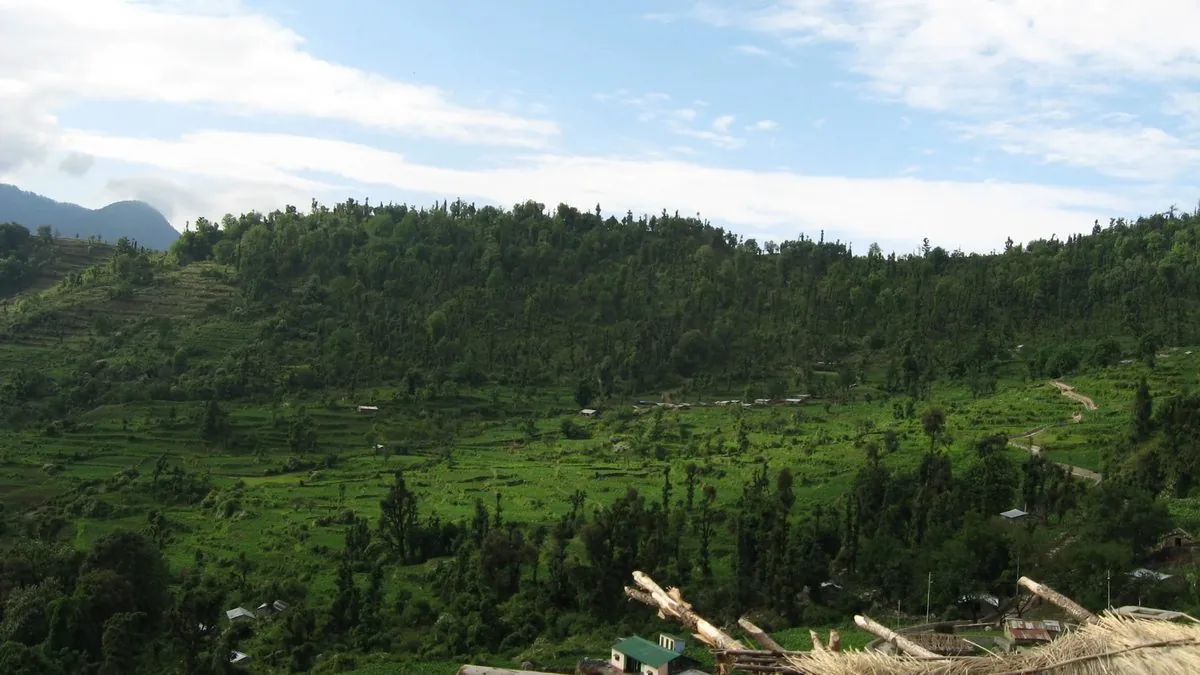
Green forested slopes and terraced fields on the Dayara Bugyal trek route in summer under a blue sky

The Dayara Bugyal route in summer, when the slopes turn green.

What About Kedarkantha?

Many trekkers shortlist Kedarkantha as well. It is shorter, 5 days from Dehradun, and ends with a steep early-morning climb to a 12,500 ft summit. If Kedarkantha is still on your list, read our Kedarkantha vs Brahmatal and Kedarkantha vs Dayara Bugyal comparisons.

Which Trek Should You Choose?

Choose Dayara Bugyal if

  • This is your first snow trek and you want the gentler trail
  • You love wide, open snowfields more than forest and lakes
  • You want a shorter drive: 185 km instead of 290 km
  • You may come back in another season, as it is open most of the year

Choose Brahmatal if

  • You want to see a frozen Himalayan lake
  • You want long ridge walks facing Mt Trishul and Nanda Ghunti
  • You are fit for steeper climbs and a long 8.5 km descent
  • You want the higher top, at 12,250 ft

What to Pack for Brahmatal or Dayara Bugyal

The packing list is the same for both, because the nights are the same: about -10°C in mid-winter.

  • Thermal top and bottoms, a fleece, a padded or down jacket and a windproof, waterproof shell
  • Woollen cap, buff, inner gloves and waterproof outer gloves
  • Two or three pairs of woollen socks and waterproof trekking shoes with good grip
  • Headlamp, sunglasses, sunscreen, lip balm and a power bank
  • Two water bottles and a lunch box for packed lunches
  • A valid photo ID, a medical fitness certificate and your adventure insurance

Book Your Brahmatal or Dayara Bugyal Trek

If you want one answer: pick Dayara Bugyal for your first and easiest snow trek, and Brahmatal if frozen lakes and big ridge views matter more than an easy trail. Check the winter dates on the Dayara Bugyal trek page or the Brahmatal trek page and send an enquiry.

Still deciding? Call or WhatsApp +91 94583 86006 and our team will help you choose the right trek and batch.

Frequently Asked Questions

Which is better, Brahmatal or Dayara Bugyal?

Neither is better for everyone. Choose Dayara Bugyal for gentle snow meadows, a shorter drive from Dehradun (185 km) and an easier first snow trek. Choose Brahmatal for frozen lakes, snow ridges facing Mt Trishul and Nanda Ghunti, and a slightly higher top at 12,250 ft. Both take 6 days from Dehradun.

Which is easier, Brahmatal or Dayara Bugyal?

Dayara Bugyal is the gentler of the two. Both are graded easy to moderate, but Dayara climbs gradually over open meadows, with one long 9.5 km summit day. Brahmatal has steeper forest climbs and two long days in a row: 5.5 km over Brahmatal Top, then an 8.5 km descent of 7 to 8 hours.

Which is better for beginners, Brahmatal or Dayara Bugyal?

Both suit fit beginners. For a first snow trek, Dayara Bugyal is the easier choice because the trail is less steep and the drive is shorter. Brahmatal suits beginners with steady fitness who can walk 6 to 8 km a day on mountain trails and want lakes and ridge walks.

Which has more snow in December and January?

Snow arrives at about the same time on both. On Brahmatal it usually settles on the upper trail in mid to late December; on Dayara the meadows are mostly white by late December. January and February are the most reliable months on both, and Dayara usually has the most snow in February. No date is guaranteed.

Which is colder, Brahmatal or Dayara Bugyal?

They are very close, because the highest camps are almost the same height: Tilandi at 10,495 ft and Chilapada at 10,515 ft. Winter nights are about -5 to -10°C on both. January nights at Brahmatal can reach about -12°C, and Dayara's upper camps can drop below -10°C on the coldest nights.

What is the cost of Brahmatal vs Dayara Bugyal with Himalaya Shelter?

Brahmatal is ₹11,200 + 5% GST per person. Dayara Bugyal is ₹11,299 + 5% GST per person from Raithal, and transport from Dehradun and back is ₹2,000 extra. The mandatory trek insurance fee is charged on top. Check the trek pages for the latest fee and dates.

What is included in the Brahmatal and Dayara Bugyal trek fee?

On both treks the fee includes a night at the base village before and after the trek, 2-person tents, sleeping bags and foam mattresses, microspikes and gaiters, vegetarian meals with eggs, an AMC-certified trek leader with local guides and kitchen staff, a medical kit with oxygen, and forest entry charges for Indian nationals. Insurance and personal gear are extra.

How do I reach Brahmatal and Dayara Bugyal from Delhi?

Travel to Dehradun first: about 5 to 6 hours by bus from Kashmiri Gate ISBT, or about 6 hours by train. Both treks start with a morning pickup in Dehradun, near the railway station. Raithal, the Dayara base, is 185 km away (8 to 9 hours); Lohajung, the Brahmatal base, is 290 km away (10 to 11 hours).

Are Brahmatal and Dayara Bugyal safe in winter?

Yes, with good preparation and a trained team. Neither trek has technical climbing, and both climb gradually, so altitude sickness is less common. The main risk is slipping on hard snow, which is why microspikes are provided. Groups of up to 12 have a certified trek leader, daily health checks, oxygen and a buffer day for bad weather.

Can I do Brahmatal or Dayara Bugyal over Christmas and New Year?

Yes. Both treks run through the holiday weeks, and the Christmas and New Year batches are usually the busiest of the winter, so book at least 3 to 4 weeks ahead. For a quieter trail, early December and February departures tend to have fewer people.