Nag Tibba Temperature Weather and Snowfall Guide
Trek Diaries

Nag Tibba Temperature Weather and Snowfall Guide

Quick answer: Nag Tibba temperature in winter (December to February) is roughly 6°C to 11°C during the day and -4°C to 2°C at night at Kathian campsite, where you sleep. The summit, at 9,915 ft (3,022 m), is about 5°C colder and can fall to around -7°C on a January morning. Snow usually settles from late December and stays through January and February, with patches near the top into March. The trek stays open all winter. To walk it in the snow, see our Nag Tibba Trek.

Nag Tibba is the highest peak in the Nag Tibba range of Garhwal, at 9,915 ft (3,022 m), and one of the easiest snow treks you can do from Dehradun or Delhi over a weekend. Because it is short, cheap and close to Mussoorie, thousands of people search for the temperature, the Nag Tibba weather today and whether there is snow in Nag Tibba now before they book.

This guide covers the temperature month by month, how cold the summit and the campsite get, the Nag Tibba snowfall time, how to read the weather forecast, what Nag Tibba is like in December, what to wear and how to reach Pantwari in winter.

By Manish Barakoti, Himalaya Shelter. Trek facts are from our own trek page, checked on 27 October 2026. Last updated: 27 October 2026.

Nag Tibba has no weather station of its own, so the figures below are approximate ranges. They are based on the long-term averages of the India Meteorological Department station at Mussoorie (about 2,000 m), adjusted for height (air cools by roughly 6°C for every 1,000 m you climb) and for the colder nights of open campsites. Mountain weather changes every year, so always check the latest forecast before you travel.

Nag Tibba Temperature at a Glance

The trek climbs from Pantwari village to Kathian campsite on day 1 and to the summit on day 2, so you meet three very different temperatures in two days.

Place Height Winter day / night
Pantwari village (base) About 1,400 m (4,600 ft) 10 to 16°C / 0 to 5°C
Kathian campsite About 2,265 m (7,430 ft) 6 to 11°C / -4 to 2°C
Nag Tibba top 3,022 m (9,915 ft) 1 to 7°C / -7 to 0°C

The night temperature at the campsite is the number to plan for. You sleep at Kathian, and after fresh snow or a cold wave the campsite can drop to around -5 to -7°C. The coldest hour is just before sunrise, which is when you start walking to the summit.

Nag Tibba Temperature Month by Month

This table shows the weather at Kathian campsite, where you spend the night. It is the best guide to what you will feel on the trek.

Month Day / Night Snow chance
October 13 to 18°C / 4 to 8°C Very low, clear skies
November 10 to 15°C / 0 to 5°C Low; light snow possible on the top late in the month
December 7 to 12°C / -3 to 2°C Snow settles from late December
January 6 to 10°C / -4 to 1°C High, usually the most snow
February 7 to 11°C / -3 to 2°C High, fresh snow spells
March 11 to 15°C / 1 to 5°C Melting; patches near the top
April to June 15 to 22°C / 5 to 12°C None
July to September 14 to 20°C / 7 to 14°C None; monsoon rain

Nag Tibba in October

The Nag Tibba temperature in October is the most comfortable of the cold season: about 13 to 18°C in the day and 4 to 8°C at night at the campsite. After the monsoon the air is clean, so October has some of the clearest views of the snow peaks from the top. The grass on the slopes turns gold. There is usually no snow. The summit is about 1 to 5°C in the early morning, so the night and the summit start already need a warm jacket.

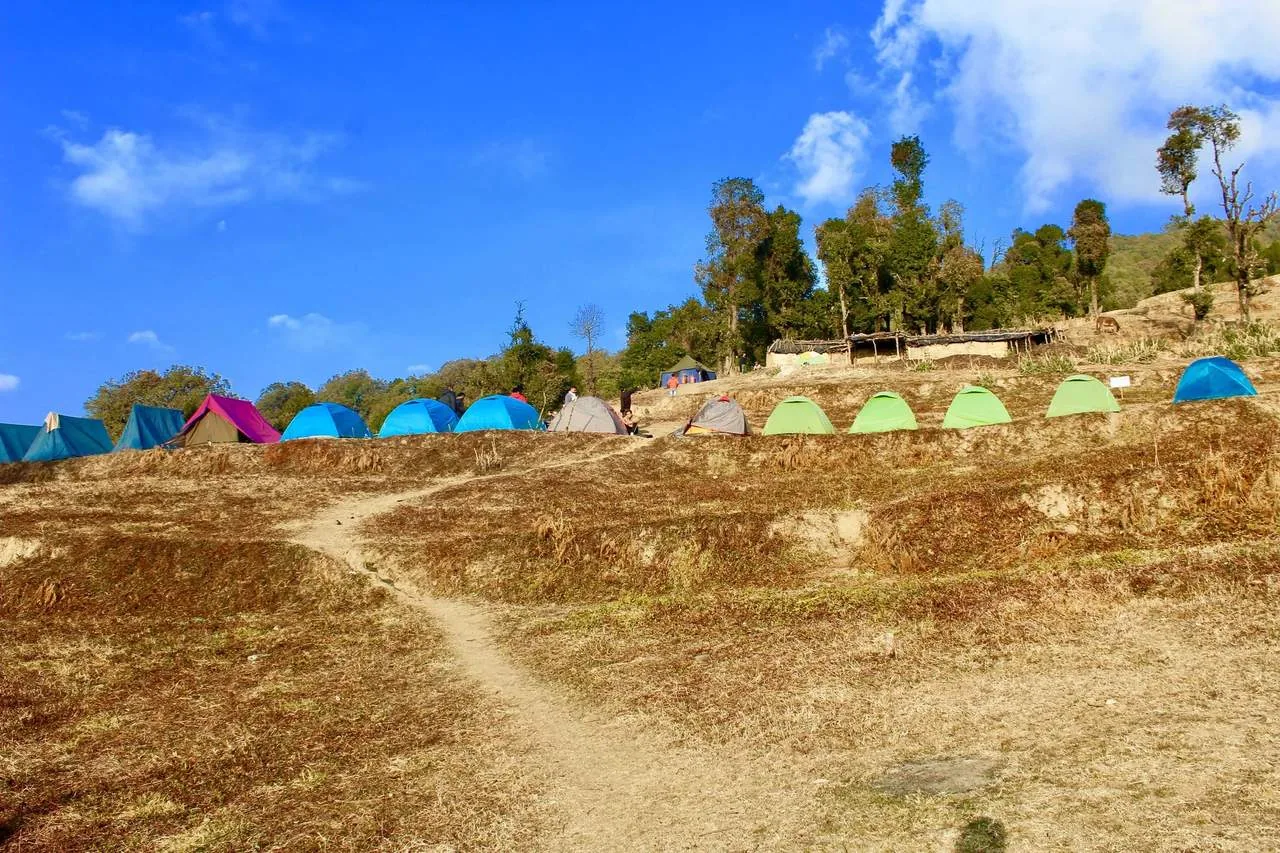
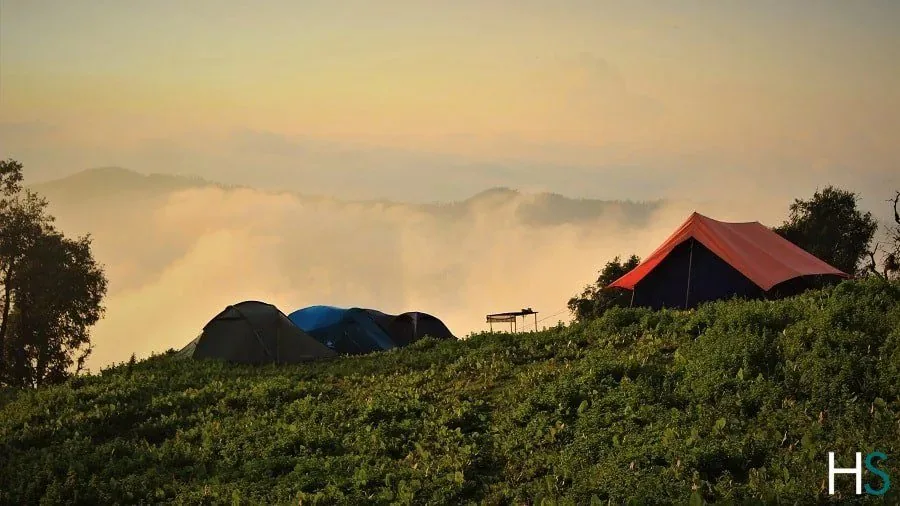
Tents on a grassy slope at the Nag Tibba campsite under a blue sky

Our campsite on the Nag Tibba trail on a clear autumn day

Nag Tibba in November

Nag Tibba in November is cold, dry and quiet. The temperature at the campsite is roughly 10 to 15°C during the day and can touch 0°C at night. There is usually no snow on the trail, although a light dusting can reach the summit late in the month. November is a good choice if you want clear skies, sharp views and fewer people.

Nag Tibba in December

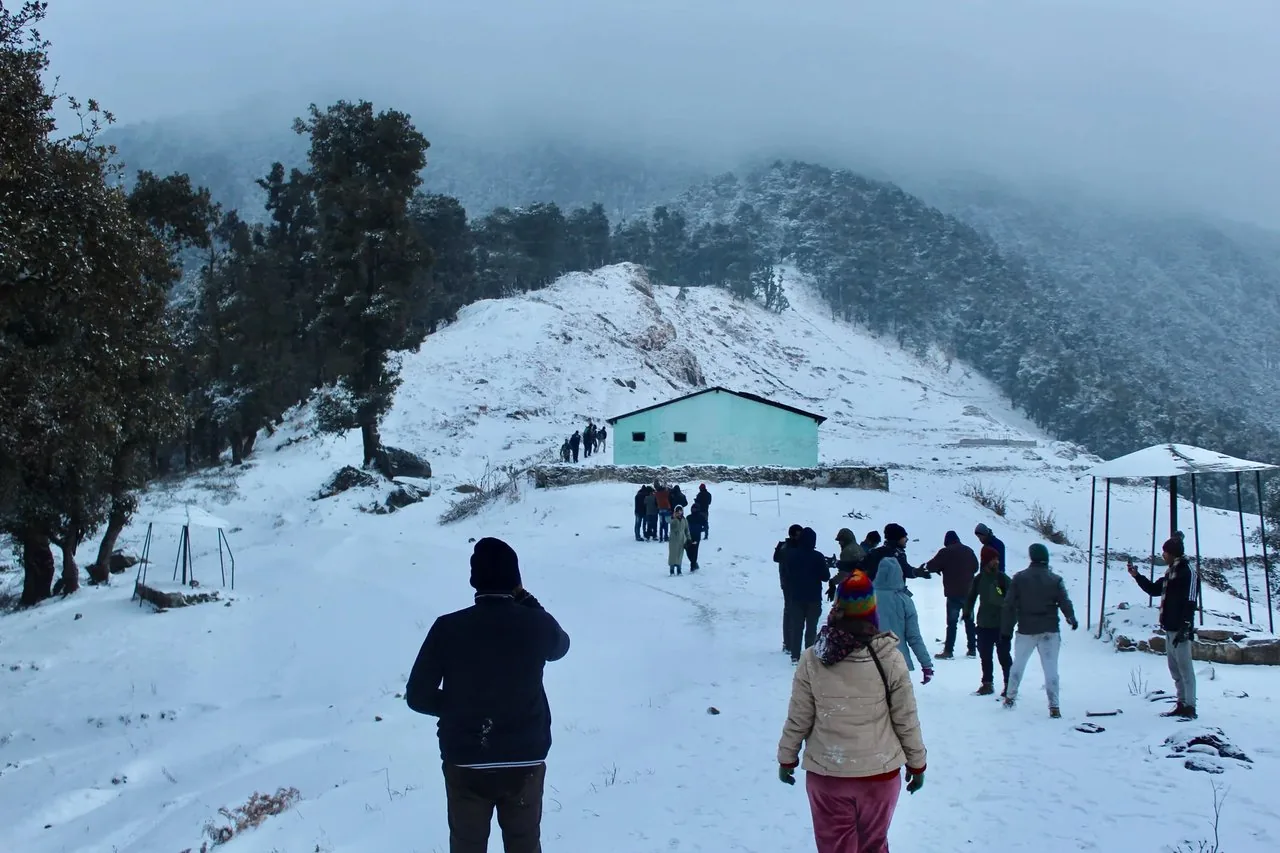
Nag Tibba in December is when winter really begins. The Nag Tibba temperature in December is around 7 to 12°C in the sun and -3 to 2°C at night at Kathian, and colder on the top. The first proper snow usually settles in late December, so the end of the month is often white while early December may still be dry. December weekends, Christmas and New Year are the busiest dates on the trek, so book early if your dates fall then.

Nag Tibba in January

January is the coldest month and usually brings the most snow. Expect about 6 to 10°C during the day and -4 to 1°C at night at the campsite, and down to around -7°C on the summit before sunrise. The upper trail and the summit ridge are often fully white. This is the month to choose if snow is the main reason for your trip.

Nag Tibba in February

February is a little milder than January, with days of about 7 to 11°C, but fresh snow spells are common. The snow on the trail is often deep after a spell, and the days are longer and sunnier, so many first-time trekkers find February the most comfortable snow month.

March and Spring

In March the snow starts melting from the lower trail, while patches can stay near the top. From April the forests around Pantwari and Kathian turn green and the rhododendrons bloom. Days are pleasant at 15 to 22°C, and nights at the campsite stay cool.

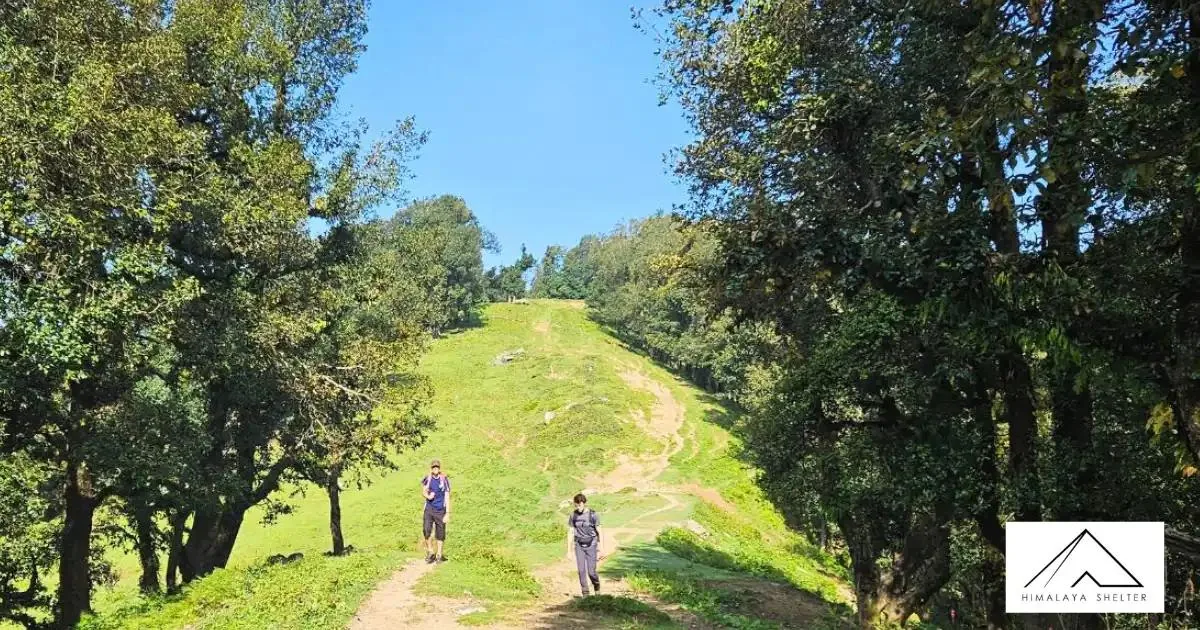
Trekkers walking on a green forest trail on the Nag Tibba trek

The forest trail to Kathian in spring

Nag Tibba in Summer and Monsoon

From April to June the weather is pleasant, with days of about 15 to 22°C and cool nights at the campsite, which makes Nag Tibba a good summer escape from the heat of the plains. From July to September the monsoon brings heavy rain, slippery trails and clouds that often hide the views, so carry proper rain gear and shoes with good grip if you go then.

Nag Tibba Summit Temperature: How Cold Is the Top?

The Nag Tibba peak is about 760 m higher than the campsite, so it is roughly 5°C colder at the same hour. The summit ridge is open, and the wind makes it feel much colder than the thermometer says. Most groups leave the campsite early and reach the top in the morning, so the morning column below is the one to dress for.

Month Summit, early morning Summit, midday
October 1 to 5°C 9 to 13°C
November -2 to 2°C 6 to 10°C
December -5 to 0°C 3 to 7°C
January -7 to -2°C 1 to 5°C
February -6 to -1°C 2 to 6°C
March -3 to 2°C 6 to 10°C
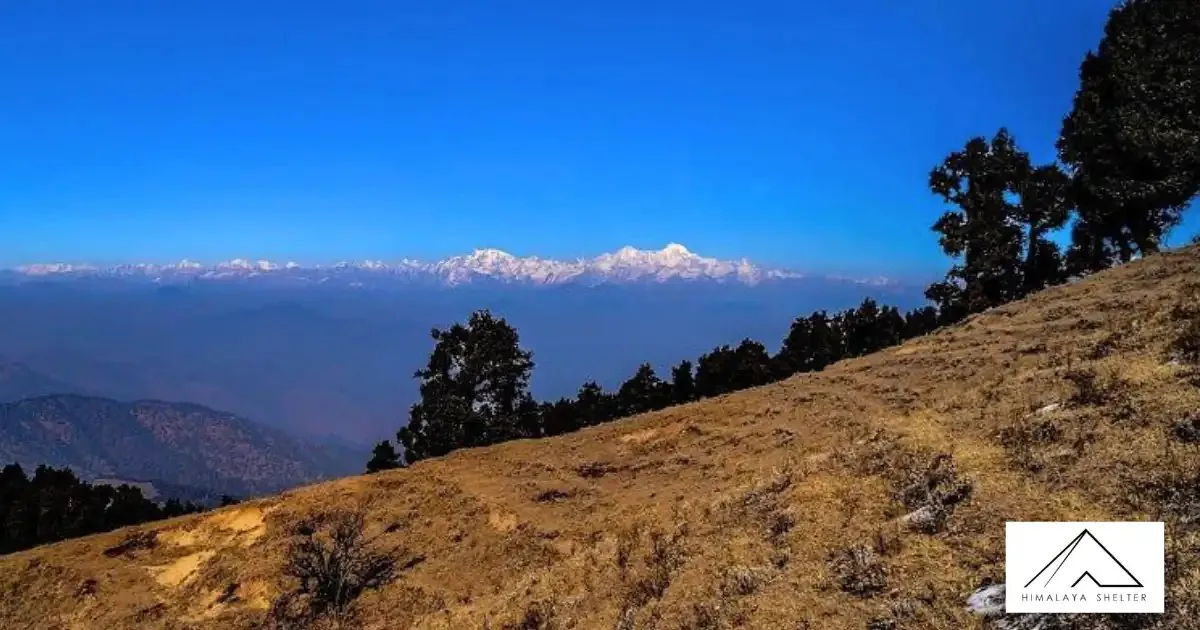
Snow-capped Himalayan peaks seen from the Nag Tibba ridge

The snow peaks of Garhwal from the Nag Tibba ridge

Nag Tibba Temperature at Night

At night you sleep at Kathian campsite, not on the summit. On a clear winter night the campsite cools fast after sunset, and the coldest hour comes just before sunrise. In December and January plan for about -3 to -5°C inside your sleeping bag area, and colder after fresh snow. A good sleeping bag, thermals and a warm cap make the night comfortable. On a clear night the Nag Tibba night sky is full of stars, so step out of the tent for a few minutes, well wrapped up.

Goat Village and Kathian Temperature

Many people also search for the Goat Village Nag Tibba temperature. The trail from Pantwari passes Goat Village on the way to Kathian, so the weather there is close to the campsite weather, usually a degree or two warmer. In winter both can get snow after a spell.

Tents at the Nag Tibba campsite at sunset with clouds below

Sunset above the clouds at the campsite: temperatures drop quickly after this

Nag Tibba Snowfall Time: When Does It Snow?

Snowfall in Nag Tibba comes in spells, usually when a western disturbance (a winter rain system from the west) reaches Uttarakhand. Snow is never guaranteed on a fixed date, but the pattern is steady most years.

First Snow and the Best Snowfall Month

The first light snow can reach the summit in late November or early December. Snow usually settles on the trail from late December, and January and February bring the most snow. If you want to walk on snow for most of the trek, choose a date between the last week of December and mid-February.

Last Snowfall and Snow Patches in March

Fresh snow can still fall in early March. By mid-March the lower trail is usually clear, while patches stay near the top. Trekkers sometimes find snow on the summit in early April after a late spell, but that is a bonus, not a plan.

Is There Snow in Nag Tibba Now?

Before late December, usually not on the trail. To check the snow in Nag Tibba now, look at recent photos from people who have just come back, and check the forecast below. The quickest way is to ask us: our trek leaders get regular updates from the trail and can tell you how much snow there is this week.

Nag Tibba Weather Today and the 15-Day Forecast

For the Nag Tibba weather today and the Nag Tibba temperature today, the most useful free tools are:

  • Mountain Forecast for Nag Tibba, which shows the forecast for the summit height, including wind and the freezing level.
  • The IMD Meteorological Centre, Dehradun, for district warnings about snow, rain and cold waves.
  • Any phone weather app set to Mussoorie, then subtract about 5°C for the campsite and about 10°C for the summit.

The Nag Tibba weather forecast 15 days ahead is only a rough guide, and a 30-day forecast is even less precise. The first 3 to 5 days are reliable; after that, treat it as a trend. For a snowfall forecast, watch for two things: a western disturbance (snow and cloud), and a clear spell after it (cold nights and the best views).

Nag Tibba Trek in Winter: What It Is Like

Nag Tibba trek weather in winter is cold but usually clear between snow spells, and the trek stays open all season. It is one of the most popular short snow treks near Dehradun. Our Nag Tibba Trek takes 2 days and reaches 9,915 ft. On day 1 you drive from Dehradun to Pantwari, about 85 km (3 to 4 hours) via Mussoorie and Nainbagh, and trek up to Kathian campsite. On day 2 you climb to the Nag Tibba top for sunrise views and come back down to Pantwari and Dehradun.

The trek is graded easy to moderate, and most beginners finish it comfortably. In winter it becomes a little harder: snow hides the trail, the climb to the top can be slippery after fresh snow, and the cold makes the early start tougher. Walk slowly, use poles, and use microspikes and gaiters on snowy days. After heavy snowfall the road or the upper trail may be closed for a day, so keep your plans flexible.

Planning a snow weekend? See Nag Tibba Trek dates, cost and inclusions.

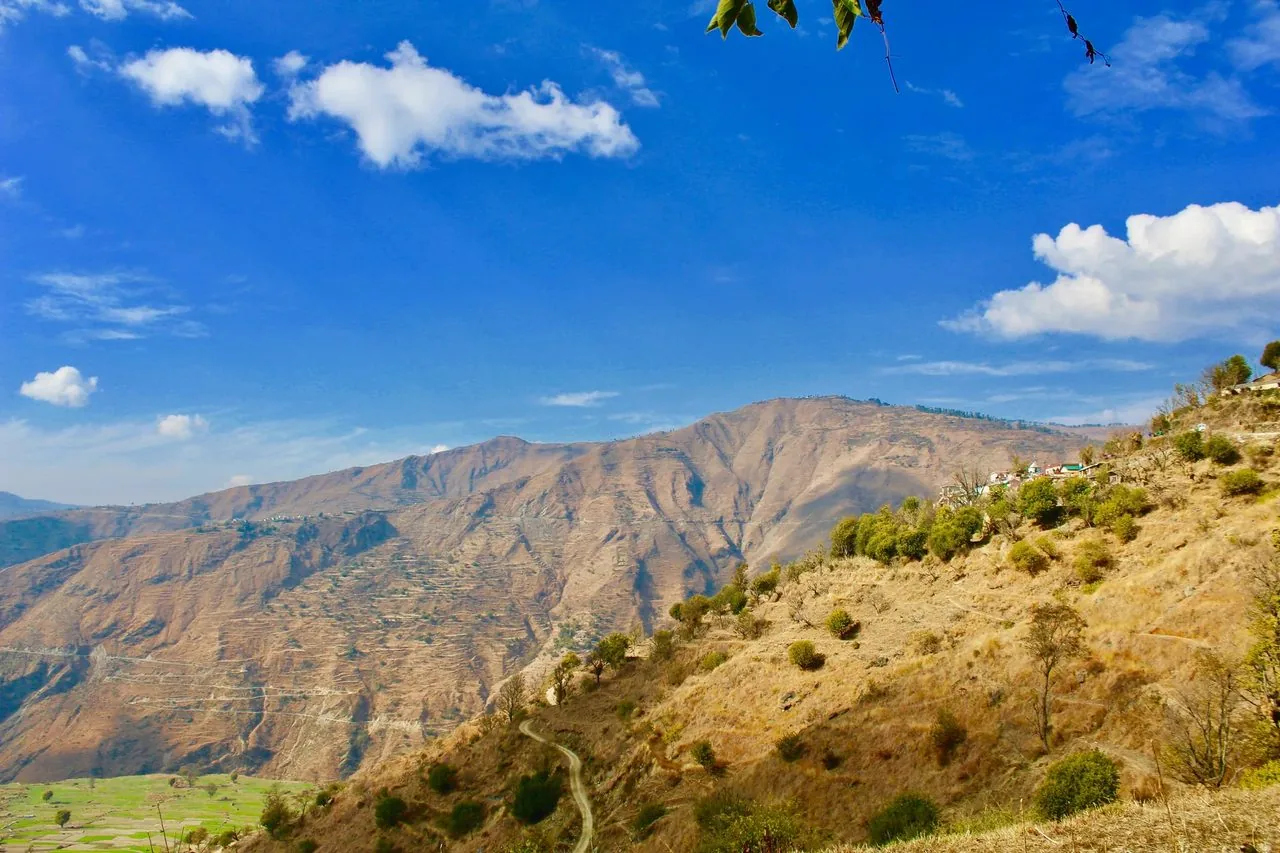
Brown autumn hills and blue sky seen from the Nag Tibba trail

The view from the Nag Tibba trail in late autumn

Best Time to Visit Nag Tibba

The trek runs in every season, so the best time depends on what you want from the trip.

If you want Go in Why
Snow on the trail Late December to February Snow settles; January has the most
Clear mountain views October and November Clean air after the monsoon
Green forests and flowers March to May Rhododendrons bloom
Escape from the heat May and June Pleasant days, cool nights

Avoid July and August unless you are ready for heavy rain. For a first Nag Tibba snow trek, a weekend in January or February is the safest choice.

What to Wear on Nag Tibba in Winter

The secret is layers. You warm up quickly while climbing and cool down fast when you stop, so wear several thin layers rather than one heavy coat.

  • Base layer: thermal top and bottom.
  • Middle layer: a fleece jacket or a warm sweater.
  • Outer layer: a down or padded jacket, plus a windproof and waterproof shell for the summit.
  • Head and hands: a woollen cap, a buff for the face, and waterproof gloves with a thin pair inside.
  • Feet: trekking shoes with good grip, two pairs of woollen socks, and gaiters for snow.
  • Extras: sunglasses (snow glare), sunscreen, lip balm, a headlamp and a water bottle that will not freeze.

For a full checklist, read our guide to essential clothing for Himalayan winter treks.

Reaching Pantwari in Winter

Pantwari, the base village, is about 85 km from Dehradun, a 3 to 4 hour drive via Mussoorie and Nainbagh. Our group transport leaves from Prince Chowk in Dehradun. From Delhi, take an overnight bus or train to Dehradun. In winter, start early: the road is narrow after Mussoorie, and after snow or frost the last stretch can be slow. Read more about the route in our guide to the Nag Tibba trek distance and base camp.

Want More Snow? Nag Tibba vs Other Winter Treks

Nag Tibba is the shortest snow trek on our list. If you have more days, these treks go higher and usually have deeper snow.

Trek Days and top Best for
Nag Tibba 2 days, 9,915 ft A first snow weekend
Chopta Chandrashila 3 days Snow plus Tungnath temple
Kedarkantha 5 days, 12,500 ft A classic snow summit
Dayara Bugyal 6 days, about 11,950 ft Wide snow meadows

For more ideas, see our guide to snowfall in Uttarakhand, which lists the best places and months for snow.

Book Your Winter Trek

Our Nag Tibba Trek costs ₹3,000 + 5% GST per person, starts from Prince Chowk in Dehradun and takes 2 days, with certified trek leaders, camping at Kathian and meals on the trek. Groups are small. For winter dates or a private group, call us on +91 94583 86006.

Frequently Asked Questions

What is the temperature in Nag Tibba in December?

The Nag Tibba temperature in December is roughly 7 to 12°C during the day and -3 to 2°C at night at Kathian campsite. The summit is about 5°C colder and can fall to around -5°C in the early morning. Snow usually settles in late December, so the end of the month is often white.

When does it snow in Nag Tibba?

Snow usually settles on the Nag Tibba trail from late December and is heaviest in January and February. Light snow can reach the summit in late November, and patches near the top often last into March. Snow comes in spells, so it is never guaranteed on a fixed date.

How cold is Nag Tibba at night?

At Kathian campsite, where you sleep, nights are about -3 to 2°C in December and -4 to 1°C in January. After fresh snow or a cold wave they can drop to around -5 to -7°C. A good sleeping bag, thermals and a warm cap are enough to stay comfortable.

What is the temperature at the Nag Tibba summit?

The Nag Tibba summit, at 9,915 ft (3,022 m), is about 5°C colder than the campsite. In January it is roughly -7 to -2°C in the early morning and 1 to 5°C at midday. The ridge is open, so the wind makes it feel much colder.

Is Nag Tibba open in winter?

Yes. The trek stays open all winter and is one of the most popular short snow treks near Dehradun. After heavy snowfall the road or the upper trail can close for a day, so trek leaders may change the timing to keep the group safe.

How cold is Nag Tibba in October?

In October, Kathian campsite is about 13 to 18°C during the day and 4 to 8°C at night, and the summit is about 1 to 5°C in the early morning. There is usually no snow, and the clean air after the monsoon gives some of the clearest views of the year. Carry a warm jacket for the night.

Is there snow in Nag Tibba in November?

Usually not on the trail. November is cold and mostly dry, with nights near freezing at the campsite. A light dusting of snow can reach the summit late in the month, but for snow on the trail, plan for late December to February.

Which month is best for snow in Nag Tibba?

January usually has the most snow and the coldest nights. February also has good snow, with longer and sunnier days, so it can feel more comfortable. For snow on most of the trek, choose a date between the last week of December and mid-February.

Can you do Nag Tibba in the monsoon?

Yes. The trek runs in every season, including July and August, when the forest is at its greenest. Expect rain, slippery trails and clouds that often hide the views, so carry proper rain gear and shoes with good grip. For clear views, October and November are better.

Can beginners do the Nag Tibba trek in winter?

Yes. Nag Tibba is graded easy to moderate and is a good first snow trek. In winter it is a little harder because of snow and cold, so walk with a trek leader, use poles and microspikes on snow, and dress in layers.

How do I check the Nag Tibba weather today?

Use Mountain Forecast for the summit, the IMD Dehradun centre for warnings, or a weather app set to Mussoorie and subtract about 5°C for the campsite. For the latest snow on the trail, call our team.

How much does the Nag Tibba winter trek cost and where does it start?

Our Nag Tibba Trek costs ₹3,000 + 5% GST per person and starts from Prince Chowk in Dehradun. It takes 2 days and reaches 9,915 ft. Check the trek page for dates and inclusions.