Snowfall in Uttarakhand Best Places to See Snow and When It Snows
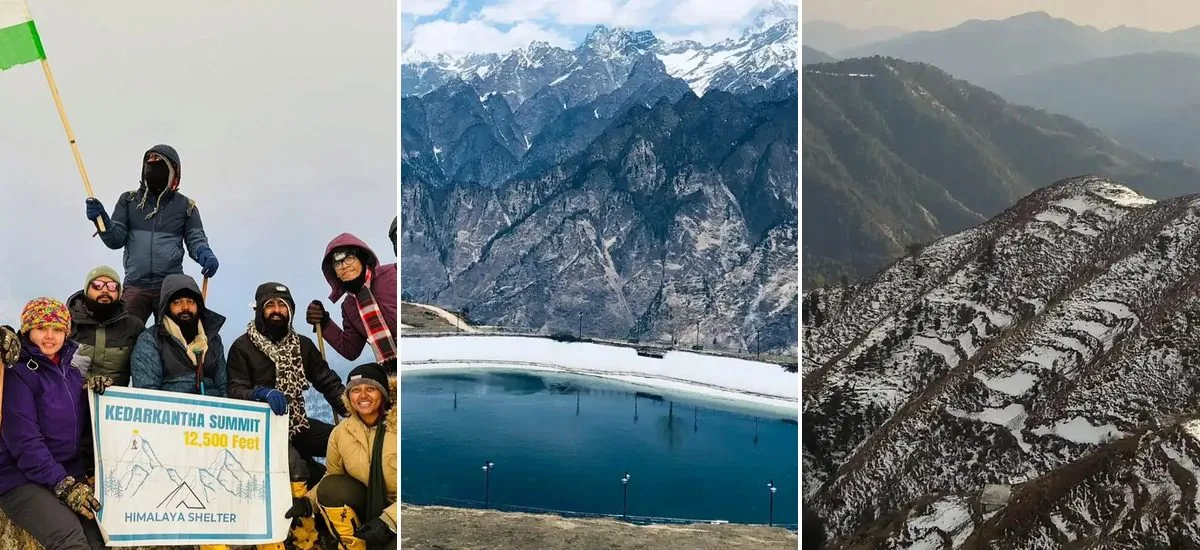
Quick answer: Snowfall in Uttarakhand usually starts on the high trekking trails in late November or December, reaches hill towns such as Mussoorie, Dhanaulti, Kanatal and Chakrata in late December to February, and is heaviest in January. Auli usually holds snow from December to March. Snow in the towns comes on a few days each winter and is never certain. For snow you can count on, walk to it: on our Kedarkantha trek (12,500 ft, 5 days from Dehradun), snow usually covers the trail from mid-December to March.
Every winter, people from Delhi and the plains head to the hills hoping to see snow, and many come back without it, because snowfall in Uttarakhand depends on height, timing and the weather. This guide explains when it usually snows, which places get snow (towns you drive to and trails you walk to), how to reach them, how to stay safe and what to pack.
By Manish Barakoti, Himalaya Shelter. Trek facts are from our own trek pages, checked on 24 October 2026. Snow months are typical patterns, not forecasts: always check the latest weather before you travel. Last updated: 24 October 2026.
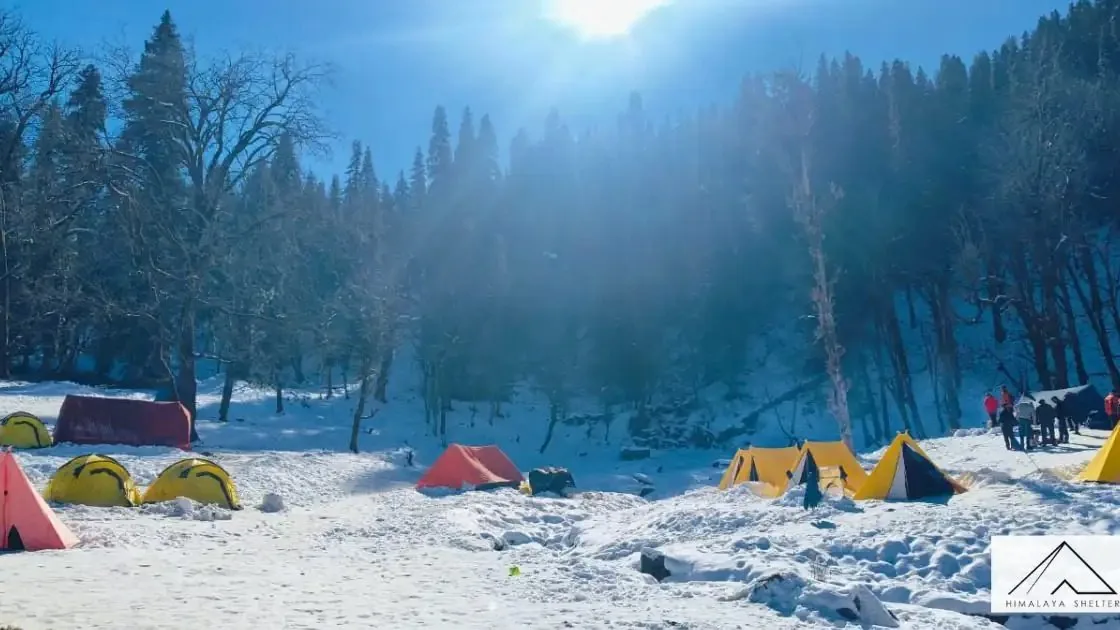
Our Kedarkantha campsite under fresh snow in winter.
When Does It Snow in Uttarakhand?
In most winters, snowfall in Uttarakhand runs from December to February, with the heaviest and most widespread snow in January. Higher places start earlier and keep snow longer: trails above about 3,000 m (10,000 ft) can see the first snow in late November and stay white until March, while hill towns at around 2,000 to 2,600 m usually get snow only between late December and February.
Most winter snow arrives with western disturbances, weather systems from the west that bring one to three days of cloud, valley rain and hill snow. Then the sky clears and the nights turn colder, so snow comes in spells: a town can be white one week and bare the next.
Height matters most. As a simple rule (general pattern, not a promise):
Below about 1,000 m (Dehradun, Rishikesh, Haridwar): no snow, only cold nights.
About 2,000 to 2,300 m (Mussoorie, Chakrata, Nainital): light snow on a few days in a normal winter, and in some winters none at all.
About 2,300 to 2,800 m (Dhanaulti, Kanatal, Surkanda Devi, Auli): snow most winters, sometimes enough to block roads for a day or two.
Above about 3,000 m (trek campsites and summits): snow cover that usually lasts for weeks or months.
Snow does not always come on time. In winter 2025-26, for example, All India Radio News reported on 23 January 2026 that the Chakrata region had recorded its first snowfall of the year, on the same day that Mussoorie, Dhanaulti, Surkanda Devi, Nag Tibba, Auli and Harsil got snow. So if you want to see snow on a fixed date, such as a Christmas or New Year holiday, go higher rather than hoping for a town.
Snowfall in Uttarakhand Month by Month
This table shows what usually happens in each month and where you have the best chance of snow. It is based on typical winters and on the month-by-month notes on our trek pages.
Month
Usually
Where to go
Oct
Clear skies, snow only on high peaks
Views of snow peaks, not snowfall
Nov
Cold, mostly dry; first snow on high trails possible late in the month
Kedarkantha, Brahmatal (not certain)
Dec
Snow builds on the treks; towns cold, snow possible late in the month
Kedarkantha, Brahmatal, Kuari Pass
Jan
Heaviest snow of the season, best month for town snowfall
All treks, Auli, Dhanaulti, Kanatal, Chakrata, Mussoorie
Feb
Snow spells continue, deep snow on the trails
Treks, Auli, Dhanaulti, Kanatal
Mar
Warmer days, snow melting in the towns
Treks, Auli
Apr
Snow patches high up, new greenery
Upper sections of the treks
May to Sep
No snow in towns or on these trails; monsoon rain in July and August
None
Best month to see snowfall in Uttarakhand: January, followed by late December and February. If you can travel only in late December, choose a trek above 3,000 m, where snow is already on the ground by then in most years.
Snowfall Places in Uttarakhand at a Glance
Here are the best places to see snow in Uttarakhand, from the closest hill towns to the high treks, with their height and the months they usually get snow.
Place
Height
Usual snow
Mussoorie, Landour
About 2,000 m
Light, late Dec to Feb
Chakrata
About 2,100 m
Late Dec to Jan
Dhanaulti
About 2,250 m
Dec to Feb
Kanatal
About 2,590 m
Late Dec to Feb
Surkanda Devi
8,858 ft
Dec to Feb
Chopta
About 2,700 m
Dec to Mar
Auli
About 2,800 m
Dec to Mar
Nag Tibba trek
9,915 ft
Late Dec to Feb
Dayara Bugyal trek
About 11,950 ft
Late Dec to Mar
Brahmatal trek
12,250 ft
Dec to Feb
Kedarkantha trek
12,500 ft
Mid-Dec to Mar
Kuari Pass trek
12,532 ft
Late Dec to Feb
Town heights are approximate. Heights and snow months for the treks are from our trek pages.
Snowfall Places You Can Drive To
These hill towns suit a short family trip by road. The catch is that town snow is short-lived: it may fall for one night and melt in two or three sunny days, and weekends after a snowfall bring traffic jams on the narrow roads.
Mussoorie and Landour
Mussoorie, at about 2,000 m and about 35 km from Dehradun, is the easiest hill station to reach. It can get light snow from late December to February, most often in January, and Landour, just above the town, usually gets a little more. In a mild winter Mussoorie may get no snow at all, so treat it as a base for higher places nearby. Our guide to the best places to visit in Mussoorie lists the viewpoints and short walks around the town.
Dhanaulti and Surkanda Devi
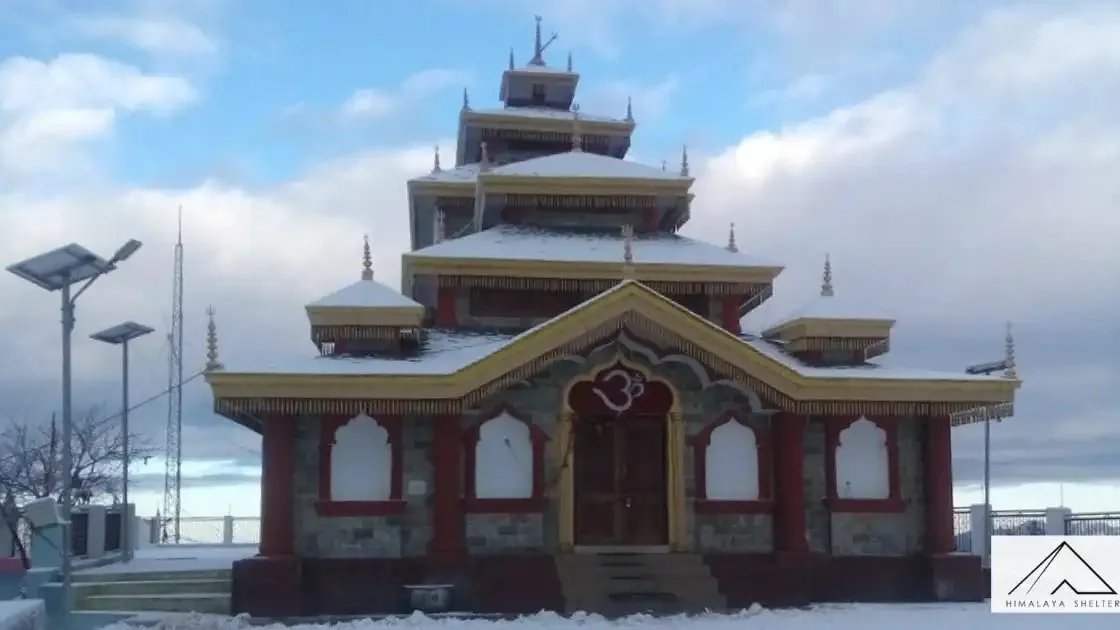
Dhanaulti is about 25 km beyond Mussoorie and a little higher, at about 2,250 m, so it gets snow more often. Snowfall is usually possible from December to February. The best snow nearby is at Surkanda Devi temple, at 8,858 ft, reached by a walk of about 2 km from the road at Kaddukhal. See our guide to the places to visit in Dhanaulti for the eco parks and viewpoints.
Surkanda Devi temple near Dhanaulti after a winter snowfall.
Kanatal
Kanatal is a small hill station at about 2,590 m (8,500 ft) in Tehri Garhwal, 78 km from Dehradun via Mussoorie and Dhanaulti, about 2 hours and 45 minutes by road. It usually gets a few snowfalls between late December and February, and heavy snow can block roads in January and February. Read our Kanatal guide for things to do and how to reach.
Chakrata, Deoban and Lokhandi
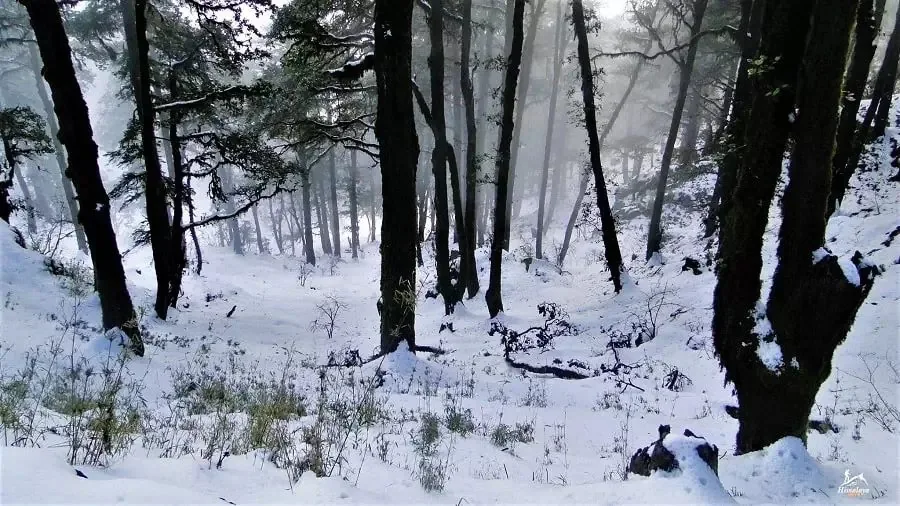
Chakrata, at about 2,100 m, is 87 km from Dehradun, and direct buses run from Dehradun. In January, days are about 12 °C and nights fall to about 2 °C, and late December and January are the months for snow. The higher points around it, such as the Deoban forest and Lokhandi, get snow more often than the town itself. Chakrata is quieter than Mussoorie. See our Chakrata travel guide for places to visit and the route.
Snow in the Deoban forest above Chakrata.
Auli
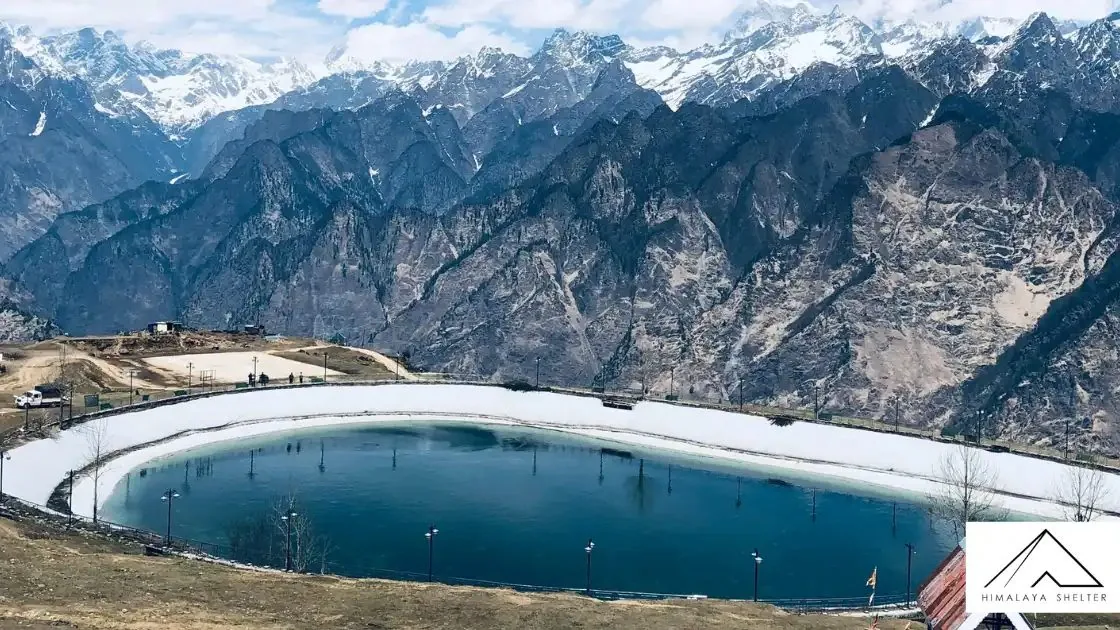
Auli, at roughly 2,800 m in Chamoli district, is Uttarakhand's best-known snow destination and its main skiing slope. Snow usually lies from December to March and is most reliable in January and February. It is also the farthest of these towns: about 380 to 400 km from Delhi, around 11 hours by road, via Rishikesh and Joshimath. Our Auli travel guide covers the best time, places to visit and skiing.
The snow-making lake at Auli, with snow peaks behind.
Chopta, Harsil, Munsiyari and Nainital
Chopta (about 2,700 m, Rudraprayag district) usually has snow from December to March and is the base for the Tungnath and Chandrashila walk, but the road can close after heavy snow, and Tungnath temple itself stays closed in winter. Harsil (about 2,600 m), in the Bhagirathi valley on the Gangotri road, gets good snow in most winters. Munsiyari (about 2,200 m) in Pithoragarh also gets winter snow, but it is a two-day drive from Delhi. Nainital (about 2,000 m) gets snow only in some winters and only on a few days, so do not plan a trip there just for snow.
Snow Treks You Walk To
If seeing snow is the main reason for your trip, a trek is the surest option. Campsites at 3,000 m and above usually keep snow for weeks, so you are not depending on one snowfall, and you get forests, campsites and a summit under snow. These treks start from Dehradun and suit beginners with basic fitness. On our winter batches, every group is capped at 12 trekkers.
Kedarkantha: the best first snow trek
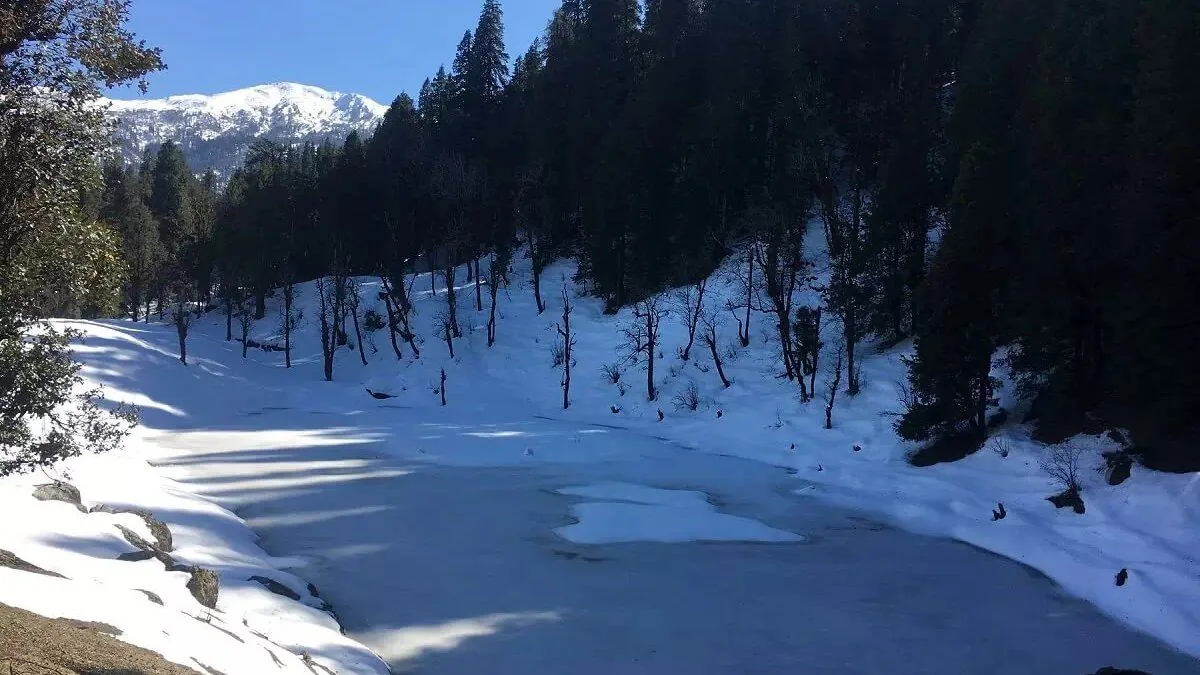
Kedarkantha is a 5-day trek from Dehradun, easy to moderate, with a summit at 12,500 ft (3,810 m). The base village, Sankri, is 190 km from Dehradun, and you walk about 20 km through pine forests and past Juda Ka Talab. The first snow usually falls in late November or early December. By mid-December, snow normally covers the trail up to the base camp, it stays until March, and January gets the heaviest snowfall. Juda Ka Talab often freezes in peak winter.
Every Kedarkantha batch gets microspikes and gaiters for walking on snow, and our team carries an ice axe, helmets, oxygen cylinders and a full medical kit. The fee is ₹10,000 per person plus 5% GST.
Juda Ka Talab, frozen and covered in snow, on the Kedarkantha trek.
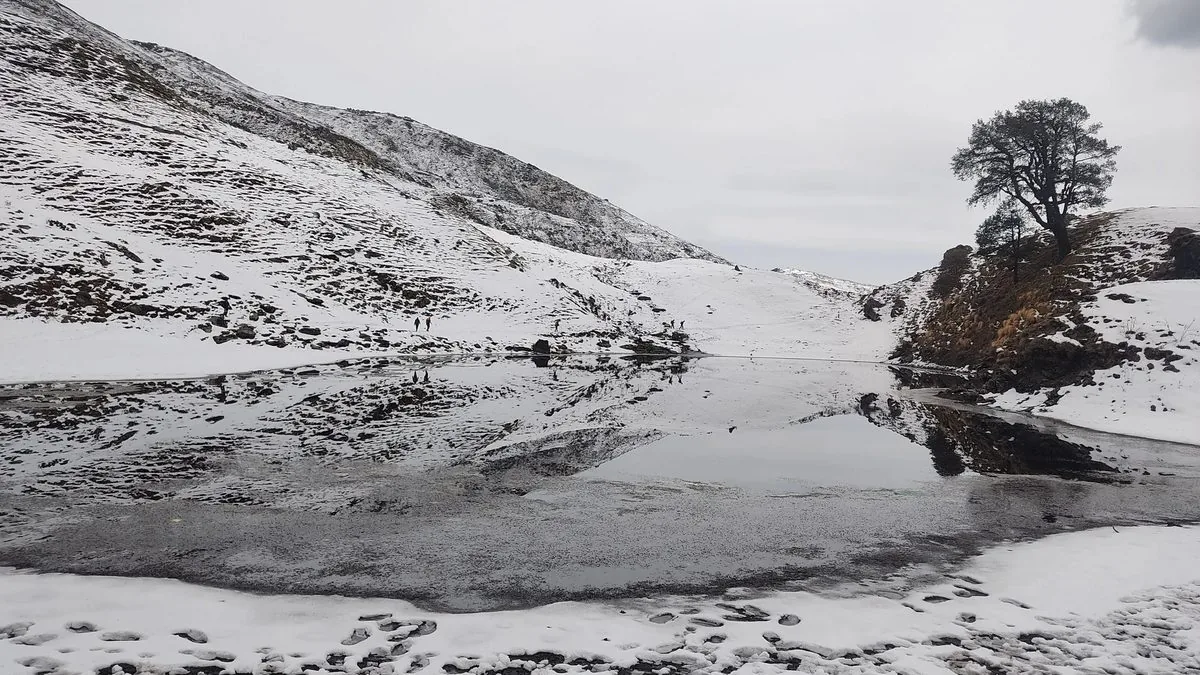
The Brahmatal trek is a 6-day trip from Dehradun in Chamoli district, easy to moderate, reaching 12,250 ft (3,734 m) over about 24 km. It starts from Lohajung, about 290 km from Dehradun. December to February is the best time for snow, when the trail is white and the lakes freeze, and the first snowfall may come at the end of November. From the top you see Trishul, Nanda Ghunti and Chaukhamba.
A frozen lake and snowy slopes on the Brahmatal trek.
Dayara Bugyal: snow meadows for easy walkers
The Dayara Bugyal trek is a 6-day trip from Dehradun to a high alpine meadow in Uttarkashi district, covering about 21 km in 4 walking days from Raithal village (7,142 ft) to Dayara Top (about 11,950 ft). Raithal is about 185 km from Dehradun, 8 to 9 hours by road. Snow usually lies from late December to March, and the open slopes are a great place for a first walk in snow. The trek is easy to moderate, and moderate in deep snow.
Nag Tibba: a weekend snow trek
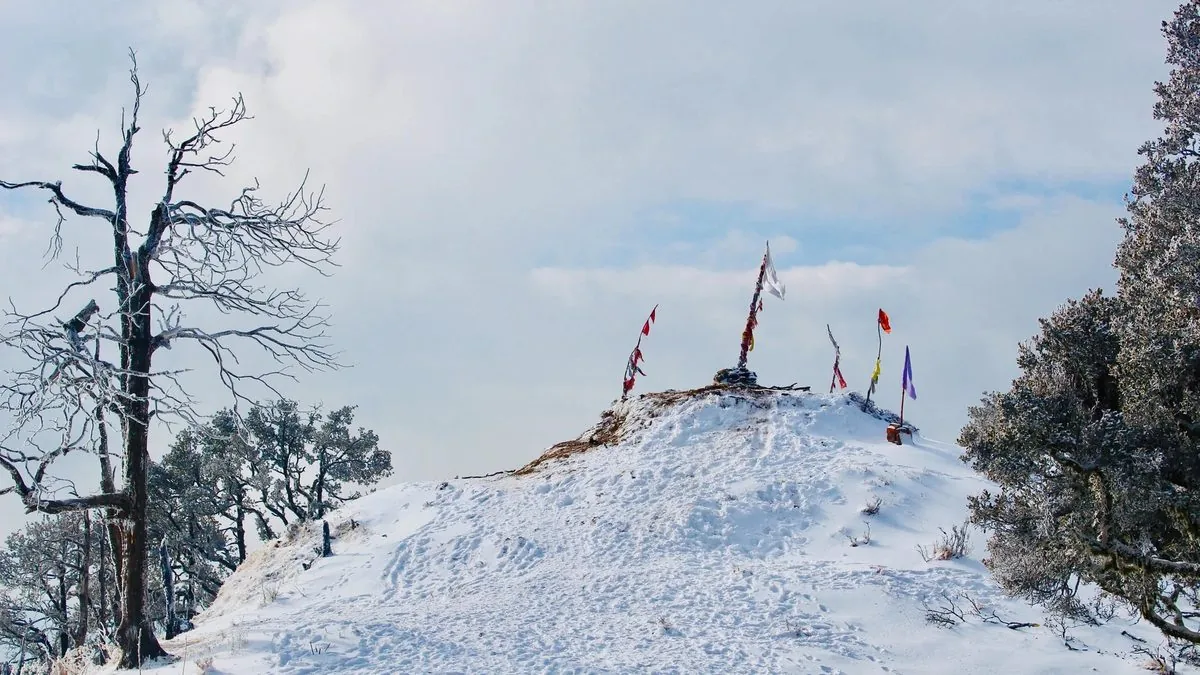
The Nag Tibba trek is the quickest way to stand in real snow from Dehradun: 2 days, an easy walk, and a summit at 9,915 ft (3,022 m). The base village, Pantwari, is 3 to 4 hours from Dehradun via Mussoorie and Nainbagh. Snow usually covers the top from late December to February. It suits a Christmas or New Year weekend: you spend one night at the Kathain campsite and reach the summit on day 2. The fee starts at ₹3,000 per person plus 5% GST.
Nag Tibba summit under snow, a weekend trek from Dehradun.
Kuari Pass: snow with the widest views
Kuari Pass is a 6-day, moderate trek near Joshimath that ends at Auli, with the top at 12,532 ft (3,820 m) and views of Nanda Devi, Dunagiri, Kamet and Chaukhamba. Snow usually settles in the second half of December, and January and February are the most reliable months. It suits fit trekkers who want the biggest mountain view.
From Delhi, first travel to Dehradun. Direct buses from Kashmiri Gate ISBT take about 5 to 6 hours, and trains from New Delhi, such as the Dehradun Shatabdi Express and the Nanda Devi Express, take about 6 hours. Our trek pickups are in Dehradun early in the morning, so most people travel overnight or arrive the evening before. From Dehradun, these are the road distances to the snow places:
From Dehradun to
Road distance or time
Mussoorie
About 35 km
Kanatal
78 km, about 2 hrs 45 min
Chakrata
87 km
Pantwari (Nag Tibba)
3 to 4 hours
Raithal (Dayara Bugyal)
About 185 km, 8 to 9 hours
Sankri (Kedarkantha)
190 km, 8 to 9 hours
Lohajung (Brahmatal)
About 290 km
Joshimath (Auli, Kuari Pass)
About 290 km, 8 to 9 hours
Nearest snowfall to Delhi: Mussoorie, Dhanaulti and Chakrata are the closest places in Uttarakhand that get snow: about 5 to 6 hours from Delhi to Dehradun, then a short drive up. Nearest snowfall to Dehradun: Mussoorie and Landour, about 35 km up the hill, then Dhanaulti and Surkanda Devi beyond them. For snow on the ground on a fixed date, the closest sure option is the Nag Tibba trek, then Kedarkantha.
Safety on Snowy Roads and Trails
Most snow-trip problems happen to people who drive up from the plains without knowing what to expect.
Black ice: melted snow freezes again at night into a thin, clear layer of ice you cannot see, worst in shaded bends early in the morning. Drive slowly, avoid sudden braking and start after the sun has warmed the road.
Snow chains and vehicles: after heavy snow, ordinary cars can lose grip on slopes. Use a vehicle with good tyres, carry snow chains or hire a local driver who has them, and keep a full tank, as fuel pumps are few above the towns.
Road closures: heavy snow can block roads for hours or a day or two, for example around Kanatal and Dhanaulti in January and February, and the police sometimes stop traffic until the road is cleared. Keep a spare day and follow local advice.
Daylight only: reach your hotel or campsite before dark; hill roads are not lit.
On the trail: walk in microspikes on hard snow, stay on the track your trek leader makes, and never cross a steep snow slope alone. Heavy snow can delay a trek day or stop a summit attempt, and the team's call on safety is final.
Cold and altitude: keep your hands, feet and head dry and warm. On treks above 3,000 m, climb slowly, drink plenty of water and tell your trek leader early if you have a headache or feel sick.
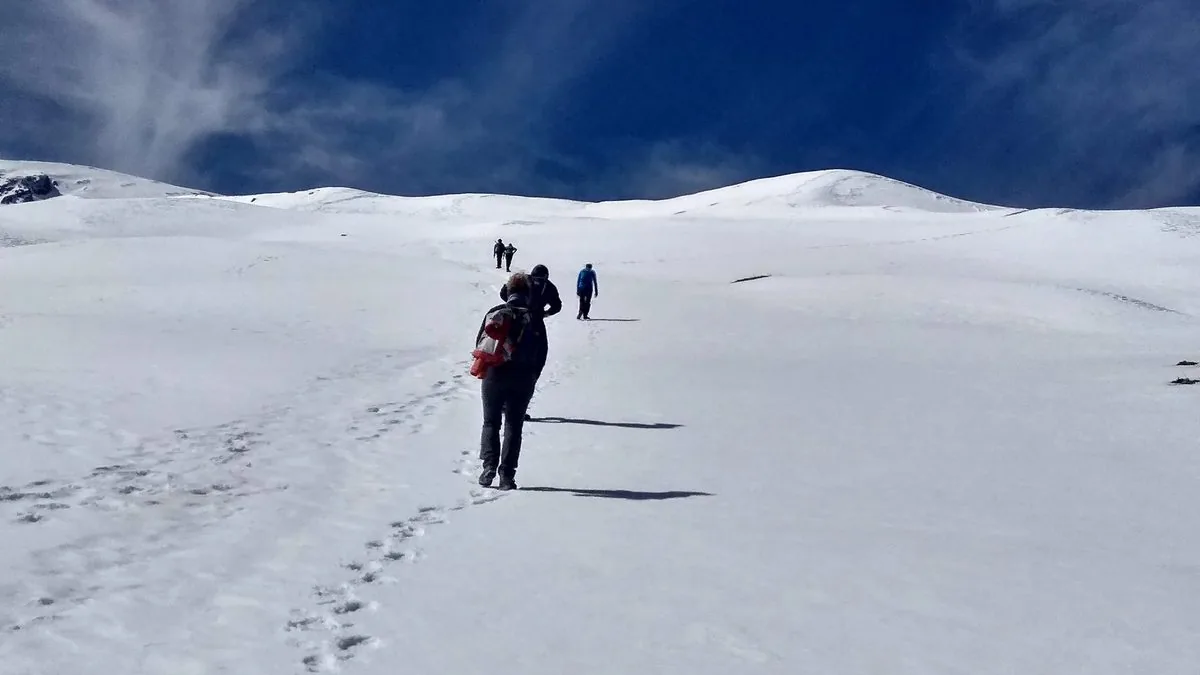
Walking on hard snow on the Kuari Pass trek in winter.
What to Pack for the Snow
Dress in layers: several thin layers keep you warmer than one thick jacket, and you can take one off when you walk uphill.
Base layer: thermal top and bottom.
Middle layers: a fleece and a warm sweater.
Outer layer: a padded or down jacket, plus a waterproof jacket for snow and sleet.
Head and hands: woollen cap, neck warmer and waterproof gloves (cotton gloves get wet and freeze).
Feet: woollen socks and ankle-high, waterproof shoes with a deep-grip sole. Sports shoes slip on snow.
Eyes and skin: sunglasses (snow glare is strong), sunscreen and lip balm.
Small things: a power bank (cold drains phone batteries fast), a torch, a water bottle and some cash, as ATMs are few in the hills.
On our Kedarkantha trek, microspikes and gaiters are provided, and you can rent trekking shoes and other gear from our store.
Book Your Snow Trek
If you want to be sure of seeing snow this winter, a trek is the most reliable way. Our Kedarkantha trek is the best choice for a first snow trek, with snow on the trail from mid-December to March in most years. For a weekend, choose Nag Tibba; for frozen lakes and big peaks, Brahmatal; and for wide snow meadows, Dayara Bugyal. See the dates and send an enquiry on the trek page.
Want help choosing a trek or a date? Call or WhatsApp +91 94583 86006 and our team will help you plan your snow trip.
Frequently Asked Questions
When does it snow in Uttarakhand?
Snowfall in Uttarakhand usually runs from December to February, with the heaviest snow in January. High trekking trails can get the first snow in late November and keep it until March. Hill towns such as Mussoorie, Dhanaulti and Chakrata usually get snow only on a few days between late December and February.
Which month is best to see snowfall in Uttarakhand?
January is the best month, followed by late December and February. January brings the most widespread snow, including in hill towns. In late December, snow is more certain on treks above 3,000 m, such as Kedarkantha, than in the towns.
Where can I see snow near Dehradun?
The closest snow to Dehradun is in Mussoorie and Landour, then Dhanaulti and Surkanda Devi, Kanatal (78 km) and Chakrata (87 km). These get snow on some days between late December and February. For snow that stays on the ground, take the 2-day Nag Tibba trek or the 5-day Kedarkantha trek.
Which is the nearest snowfall place to Delhi in Uttarakhand?
Mussoorie, Dhanaulti and Chakrata are the nearest places in Uttarakhand that get snowfall: about 5 to 6 hours from Delhi to Dehradun, then a short drive up. Snow there is not certain, so for a fixed holiday date, a trek such as Nag Tibba or Kedarkantha is a safer bet.
When does it snow in Auli?
Auli usually has snow from December to March, and it is most reliable in January and February, which is also the skiing season. Auli is about 380 to 400 km from Delhi, around 11 hours by road via Rishikesh and Joshimath.
Does Mussoorie get snowfall?
Yes, but not much. Mussoorie can get light snow from late December to February, most often in January, and in some winters it gets none. Landour, Dhanaulti and Surkanda Devi are higher and get snow more often.
Is snowfall guaranteed in December?
No. Snow in hill towns is never guaranteed in December and sometimes does not come until January. On high treks it is much more likely: on Kedarkantha, snow normally covers the trail up to the base camp by mid-December. Check the forecast a week before you travel.
Does it snow in Uttarakhand in October or November?
In October and November, snow usually falls only on the high peaks and passes, so you see snow-capped mountains but not snowfall in the towns. High trekking trails such as Kedarkantha and Brahmatal can get their first snow in late November.