Snowfall in India 2026 27 Best Places and Snow Dates
Trek Diaries

Snowfall in India 2026 27 Best Places and Snow Dates

The first snow of winter 2026-27 has already fallen in India. Kashmir's high reaches saw snow in early October, Lahaul turned white in mid-October, and Kedarnath received its first heavy snowfall on 29-30 October 2026, with Badrinath following on 1-2 November. The season has begun early.

This guide tells you where snowfall in India actually happens, when each place gets it, and how reliable it really is: a dated snow status for this season, 15 places compared honestly, a month-by-month guide, and the snow treks that let you walk in deep snow instead of watching it from a hotel window.

Snowfall in India happens only in the Himalayan north and north-east, in Jammu and Kashmir, Himachal Pradesh, Uttarakhand, Sikkim and Arunachal Pradesh. The season runs from late November to March, and January is the most reliable month. Gulmarg, Sonamarg, Auli and Solang Valley above Manali get the deepest snow, and the first snow of 2026-27 fell in October itself.

By Manish Barakoti, Himalaya Shelter. Himalaya Shelter is a Dehradun-based trekking company that runs winter treks across Uttarakhand every season. Last updated: 4 November 2026.

Snowfall in India: The Short Answer

India is mostly a tropical country, and it snows only where the Himalaya rises high enough: Jammu and Kashmir, Ladakh's high passes, Himachal Pradesh, Uttarakhand, Sikkim and Arunachal Pradesh. No plains city, and no part of South India, gets real snowfall.

The highest reaches, above about 3,500 metres, can see their first snowfall in India as early as September or October. The towns and resorts people actually visit, between about 2,000 and 3,000 metres, get their snow from late November onwards, with January the most reliable month almost everywhere. By March, only the high places still hold snow.

One warning before the lists: snowfall is weather, not a timetable. In 2025-26, Shimla and Manali waited until 23 January 2026 for their first snow; in 2024-25, Shimla's first snow came on 8 December itself. This guide gives you the real record of the last three winters so you can judge the odds yourself.

Where Is It Snowing in India Right Now? (Snow Status as of 4 November 2026)

Snowfall in India today is a high-altitude story. As of 4 November 2026, this season's snow is on the high reaches, and the famous towns are still waiting for their first fall. The dated record of winter 2026-27 so far:

  • 5 September 2026: first snow of the season above about 3,900 metres around Sonamarg, Zojila and the heights near Gulmarg.
  • 13-14 October 2026: fresh snow in Gulmarg, Sonamarg, Gurez and the Pahalgam area; the Kashmir valley floor saw rain only.
  • 15 October 2026: Lahaul's first heavy snow of the season; the Atal Tunnel was briefly closed and reopened the next day.
  • 29-30 October 2026: Kedarnath's first heavy snowfall of the season, after a lighter spell earlier that week.
  • 1-2 November 2026: fresh snow at Badrinath and the peaks around it.

So the honest answer to "is it snowing in India right now" is: yes, but only high up. For snow in a town you can drive to, history says late November onwards for Gulmarg's meadows, and December or January for most other resorts.

How to check before you leave: see the India Meteorological Department (IMD) forecast for your exact district for the next 5-7 days, then check the district administration and state police road updates on the morning you travel; in Lahaul-Spiti, the police publish a daily road status. Road closures are announced there first, not on travel blogs. We will update this section as the first town-level snow falls.

15 Best Places to See Snowfall in India

These are the snowfall places in India that travellers can actually reach, compared in one table first, then one by one. Elevations are rounded; distances are approximate.

Place State Best snow month
Gulmarg Jammu and Kashmir January
Sonamarg Jammu and Kashmir January-February
Pahalgam Jammu and Kashmir January
Manali Himachal Pradesh January
Shimla Himachal Pradesh January
Kufri Himachal Pradesh January
Narkanda Himachal Pradesh January
Dalhousie and Khajjiar Himachal Pradesh January
Kaza, Spiti Valley Himachal Pradesh February
Auli Uttarakhand January
Chopta Uttarakhand January
Dhanaulti Uttarakhand January
Munsiyari Uttarakhand January-early February
Tawang Arunachal Pradesh January-February
Lachung and Yumthang Sikkim January-February

1. Gulmarg, Jammu and Kashmir. About 2,650 m (8,690 ft). India's most reliable snowfall destination and its main ski resort. Snow starts on the slopes in late November; January brings the deepest cover. Fly to Srinagar, then about 2 hours by road.

2. Sonamarg, Jammu and Kashmir. About 2,730 m (8,960 ft). A high meadow valley about 80 km from Srinagar, with snow from December to March, several metres deep in peak months. The road beyond, over Zojila, closes roughly November to April-May.

3. Pahalgam, Jammu and Kashmir. About 2,200 m (7,200 ft). A gentler Kashmir snow town on the Lidder river, about 90 km from Srinagar. Snow from late November or December to February-March, best in January.

4. Manali, Himachal Pradesh. About 2,050 m (6,700 ft). The most searched snowfall town in India. Town snow falls mid-December to February; Solang Valley, higher up, gets it earlier and deeper. Full detail in the Himachal section below.

5. Shimla, Himachal Pradesh. About 2,200 m (7,220 ft). The easiest snow town to reach from Delhi, about 370 km (approximate), but its snow is the least guaranteed on this list. When a good spell comes, usually in January, the Ridge turns white.

6. Kufri, Himachal Pradesh. About 2,720 m (8,900 ft). Just 15-16 km above Shimla and colder, so it catches snow when Shimla misses it. Snow possible from November, strongest in December-January, often snow-clad till March.

7. Narkanda, Himachal Pradesh. About 2,708 m (8,900 ft). About 60-65 km from Shimla. A quiet ski-slope town with snow from late December to February and fewer crowds than Kufri.

8. Dalhousie and Khajjiar, Himachal Pradesh. About 1,970 m (6,460 ft). Colonial hill towns with snow from December to February; Khajjiar's meadow, 22-24 km away, is one of Himachal's prettiest sights under snow. Gateway railhead: Pathankot.

9. Kaza, Spiti Valley, Himachal Pradesh. About 3,800 m (12,500 ft). The deepest, coldest winter on this list. In winter Spiti is reachable only by the Shimla-Kinnaur road; the Manali route closes with the snow. February is the best month. Foreigners need an Inner Line Permit.

10. Auli, Uttarakhand. Slopes about 2,505-3,050 m (town area about 2,800 m). Uttarakhand's ski centre above Joshimath, season December to mid-March, peak January. Our full guide to snowfall in Auli carries its first-snow dates and ski details.

11. Chopta, Uttarakhand. About 2,680 m (8,800 ft). A small meadow settlement that becomes the base for the snow trek to Tungnath and Chandrashila. Snow from December to early March, heaviest in January. About 220 km by road from Haridwar (approximate).

12. Dhanaulti, Uttarakhand. About 2,286 m (7,500 ft). The closest snow town to Dehradun, past Mussoorie. Snow falls in short spells, December to February; go in mid-to-late January and keep the plan flexible.

13. Munsiyari, Uttarakhand. About 2,200 m (7,200 ft). A remote Kumaon town facing the Panchachuli peaks, with snow mainly December to February, best mid-January to early February. Gateway railhead: Kathgodam, then a long hill drive.

14. Tawang, Arunachal Pradesh. About 3,048 m (10,000 ft). Heavy snow from November to February; the Sela Pass on the way often closes for days in deep winter. Indians need an Inner Line Permit, foreigners a Protected Area Permit. Gateway: Guwahati, then a two-day drive.

15. Lachung and Yumthang, Sikkim. Lachung about 2,620 m (8,600 ft), Yumthang about 3,600 m (11,800 ft). North Sikkim's snow valley, about 115-124 km from Gangtok. Snow December to March, deepest January-February. A Protected Area Permit is compulsory for all visitors, arranged only through registered Sikkim operators.
Snowfall in India Month by Month (November to March)

Month Where snow is likely How reliable
November High reaches: Gulmarg slopes, Zojila, Spiti, Tawang, high Uttarakhand Low for towns; high places only
December Gulmarg, Sonamarg, Auli, Chopta, Kufri in good spells Uncertain; famous towns often wait till January
January Almost everywhere on the list Highest of the season
February Deep snow in Kashmir, Spiti, Sikkim, upper Uttarakhand High, with fewer crowds
March High reaches and north-facing slopes Falling; ski slopes and high treks only

November belongs to the high mountains: the first falls land above 3,500 metres, and a few resorts, Gulmarg among them, may see their slopes whiten late in the month. Town-level snow is rare.

December is the month everyone asks about, and the honest answer is: it depends on the year. In 2024-25, Shimla, Kufri, Narkanda, Mussoorie, Nainital and Auli all got their first snow on 8 December 2024. In 2025-26, after a three-month dry spell, Shimla and Manali got theirs only on 23 January 2026. December town snow is possible, never guaranteed; if December is your only window, aim high: Gulmarg, Auli or a snow trek.

January is the peak. Kashmir's Chillai Kalan, the harshest 40 days from 21 December to 31 January, brings the valley its deepest snow. Almost every place on this list is at its whitest in January, and it is the month to pick if the trip can be planned around snow alone.

February keeps the deep snow with thinner crowds, and is the best winter month for Spiti. March is for the high reaches only: ski slopes and the higher treks still hold snow while the towns green up.

For this winter, one caution: IMD's official winter outlook was still awaited when this guide was written, and forecasters expect a milder, El Nino-leaning winter with short cold waves rather than one long snowy season. Expect sharp snow spells, not snow on demand, and keep dates flexible.

Snowfall in Uttarakhand

Uttarakhand is our home ground, with its own full guide: snowfall in Uttarakhand. In short: Auli is the ski centre; Chopta is the snow-trek base for Tungnath and Chandrashila; Dhanaulti and Chakrata are the short-spell snow towns near Dehradun; Munsiyari is the remote Kumaon option facing the Panchachuli range.

Dayara Bugyal meadow covered in snow in winter, Uttarakhand
Dayara Bugyal under snow. In winter this meadow becomes one of Uttarakhand's easiest snow walks.

Two honest notes. First, the Joshimath-Auli ropeway has been closed since January 2023; Auli is reached by road, and the ski-slope chairlift runs in season. Second, the Tungnath temple closes for winter (this year on 6 November 2026), but the trail past it to Chandrashila still runs in snow, so January Chopta is a trek, not a temple visit. Our Chopta Chandrashila temperature and weather guide has the month-wise detail. Lower down, snowfall in Nainital and snowfall in Mussoorie are light and occasional; both towns saw snow on 8 December 2024, and both can pass a whole winter with almost none.

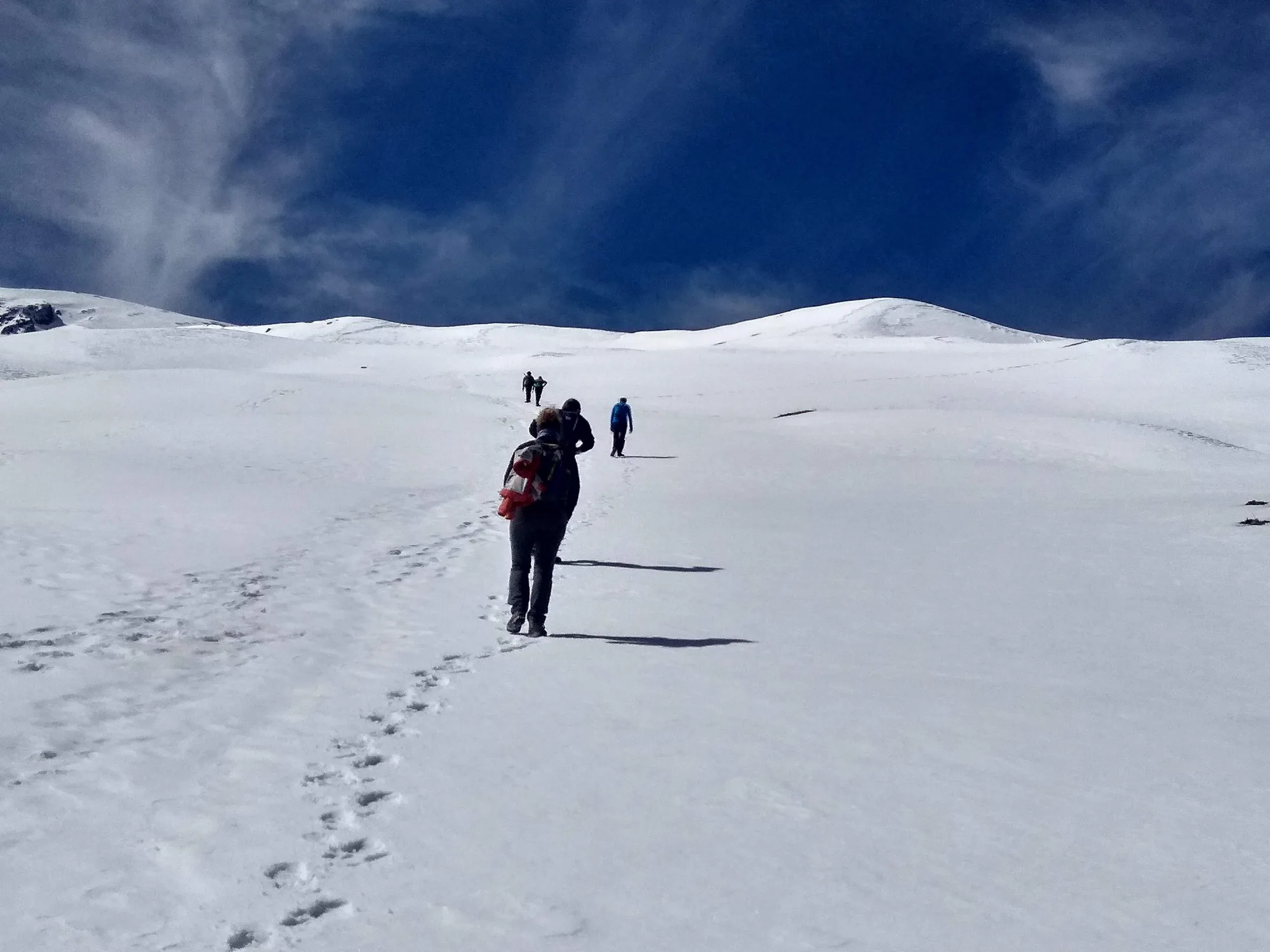
Trekkers walking through deep snow towards Tungnath and Chandrashila in Chopta, Uttarakhand
The snow trail from Chopta towards Tungnath and Chandrashila in deep winter.

Snowfall in Himachal Pradesh

Manali gets the largest share of India's snow searches, so here is its real picture. The town sits at about 2,050 m, and town snow usually falls between mid-December and February, in spells. It is not guaranteed: in 2025-26 Manali's first snow came only on 23 January 2026. Solang Valley, higher up the same road, is higher, gets snow earlier and deeper, and hosts most snow activities. Beyond Solang, the Atal Tunnel keeps Lahaul reachable all year with no permit, but after snowfall the administration may allow only 4x4 vehicles or stop tourist traffic for a day, so check the police road status that morning. Rohtang Pass needs an online permit (Rs 550 per car, capped at 1,200 vehicles a day, closed Tuesdays), and the pass road itself shuts for winter around late November, so in deep winter there is no Rohtang day trip.

Shimla, Kufri and Narkanda form one circuit. Shimla (about 2,200 m) is the classic first snow trip from Delhi, but its snow is spell-based and some winters almost skip it. Kufri and Narkanda, higher and colder, catch snow more often; if Shimla town is dry, drive up before you give up. Dalhousie and Khajjiar get snow from December to February, and Kalpa and Kaza in Spiti get the state's deepest winter: a serious cold-weather trip, entered only via the Shimla-Kinnaur road, with Inner Line Permits for foreign visitors.

Snowfall in Kashmir

Kashmir gets India's deepest and most reliable snow. Gulmarg (about 2,650 m) is the centre of it: snow from late November on the slopes, deepest cover in January-February, skiing into spring. Its gondola runs in two phases up to the Apharwat slopes; book gondola tickets only on the official JKCCC portal, as tickets are sold online only and fraud sites exist. Sonamarg (about 2,730 m), 80 km from Srinagar, is buried several metres deep in peak months, and the Zojila road beyond it closes from about November to April-May. Pahalgam (about 2,200 m) is the softer option, a riverside town with snow from late November or December.

Srinagar itself (about 1,585 m) sees snow on some days between mid-December and February, not in every spell. The heart of the Kashmir winter is Chillai Kalan, the 40 harshest days from 21 December to 31 January, when the valley gets its heaviest falls. That window, and the weeks just after, hold the deepest snow in India.

Snowfall in Sikkim and the North East

North Sikkim is the east's snow country. Lachung (about 2,620 m), 115-124 km from Gangtok, is the base village; Yumthang Valley (about 3,600 m), about 25 km beyond it, lies under snow from December to April, though heavy January-February falls can close the road for days. Every visitor needs a Protected Area Permit, arranged only through a registered Sikkim operator with photo ID and photographs. Nathula Pass (about 4,310 m), 56 km from Gangtok, is open only to Indian citizens under a special permit through registered operators, and frequently stays closed in December-February because of the very snow people go to see; plan it for October to mid-December or spring.

In Arunachal Pradesh, Tawang (about 3,048 m) gets heavy snow from November to February. The journey is half the experience: two days by road from Guwahati over the Sela Pass, which can close for days in late December-February. Indians need an Inner Line Permit (applied online; about Rs 300 for up to 3 days, Rs 500 for up to 14 days); foreign nationals need a Protected Area Permit.

Snowfall in South India? The Honest Answer

No. South India does not get real snowfall, and any list that names a South Indian "snowfall place" is bending the truth. The one name that always comes up is Lambasingi, a village at about 1,000 m in the Eastern Ghats of Andhra Pradesh. On the coldest December-January nights its temperature can fall to about 0 degrees Celsius or just below, and dew freezes into white frost on grass and rooftops. It looks like snow in early-morning photographs, which is how the story spreads, but it is frost, not falling snow; news reports on Lambasingi say the same.

If frost and fog are enough, Lambasingi in late December is a pleasant cold trip. But if you want to stand in falling snow and walk in it, there is no shortcut: you have to come north to the Himalaya.

Snowfall Near Delhi: Weekend Snow Trips

Delhi sends the most snow trips in India, so here is the distance reality. Every figure is approximate; snow at the near places is spell-based, so go when a spell is forecast, not on a fixed date.

Place From Delhi (approx) Is 2 days enough?
Shimla About 370 km, 7-8 hrs Yes, tight; snow not guaranteed
Kufri / Narkanda Shimla + 16 / 65 km Yes; better snow odds than Shimla
Dhanaulti Via Dehradun hill road No; take 3 days
Chakrata Via Dehradun hill road No; take 3 days
Manali About 540-550 km, 12-14 hrs No; needs 4 days
Munsiyari Via Kathgodam + long hill drive No; needs 4-5 days

Budget, roughly: a 2-day Shimla-Kufri trip from Delhi by bus, with a simple hotel and meals, costs about Rs 4,000-7,500 per person (approximate, at November 2026 prices). Dhanaulti or Chakrata over 3 days runs about Rs 5,000-9,000 per person (approximate) with a hired car from Dehradun costing more than the bus route. In a live snowfall spell, hill hotels fill and rates rise, so book after the forecast turns, not before.

Weekend travellers in fresh snow at Nag Tibba near Dehradun, Uttarakhand
Fresh snow at Nag Tibba, the weekend snow trek above Dehradun.

The cheapest snowfall places in India sit on this Delhi circuit: a bus to Shimla and a taxi up to Kufri costs a fraction of a Kashmir flight. The second cheap option is Uttarakhand's weekend belt; the Nag Tibba Trek from Dehradun is a 2-day snow walk covered in the trek section below.

Do Not Just Watch the Snow: Trek in It

Every place above shows you snow from a road or a hotel lawn. A snow trek puts you inside it for days: frozen lakes, snow-loaded forests and a summit. Uttarakhand's winter treks run from Dehradun with a maximum of 12 trekkers per group, and every winter batch carries microspikes and gaiters and a medical kit with oxygen. Our best winter treks in India guide compares the season; these are the six to start with.

The frozen Brahmatal lake surrounded by snow in winter, Uttarakhand
Brahmatal lake under snow. It is one of the two lakes on this trek that freeze in winter.
Winter trekking on the snow covered Kuari Pass trail in Uttarakhand
On the Kuari Pass trail in winter, the walk itself is the snowfall experience.

Kedarkantha Trek: 5 days, Dehradun to Dehradun, easy to moderate, summit about 12,500 ft, snow from December to March. Rs 10,000 per person + 5% GST. India's most loved first snow trek; our Kedarkantha temperature guide shows what each month feels like on the trail.

Brahmatal Trek: 6 days, about 24 km on foot, top about 12,250 ft, easy to moderate, with two lakes that freeze in winter. Rs 11,200 per person + 5% GST. The Brahmatal temperature guide has its month-wise cold record.

Dayara Bugyal Trek: 6 days, about 21 km, Dayara Top about 11,950 ft, easy (moderate in snow), snow late December to March. Rs 11,299 per person + 5% GST, plus transport Rs 2,000. Rolling meadows that turn into a white desert.

Kuari Pass Trek: 6 days, about 28 km, top 12,532 ft, moderate. Rs 17,999 per person + 5% GST. The Lord Curzon trail, ending through Gorson Bugyal above Auli, facing Nanda Devi.

Nag Tibba Trek: 2 days, about 20 km, 9,915 ft, easy. Rs 3,000 per person + 5% GST. The weekend snow trek from Dehradun; check its snow window in the Nag Tibba temperature guide.

Chopta Chandrashila Tungnath Trek: 3 days, easy, Chandrashila summit 13,123 ft. Rs 9,900 per person + 5% GST. A temple trail in summer; in snow, a proper little summit climb.

Ready to walk in the snow? Check batch dates and send an enquiry on the trek page, or WhatsApp us.

Frequently Asked Questions

Is it snowing in India right now?

As of 4 November 2026, snow lies only on the high reaches: Kashmir's heights had snow in September and October, Lahaul turned white on 15 October, and Kedarnath and Badrinath received snow around 29 October-2 November. The resort towns get their first snow from late November onwards in most years.

Which is the best month for snowfall in India?

January. Almost every snowfall place in India, from Gulmarg to Auli to Lachung, is most reliable in January. February is a close second, with deep snow and fewer crowds. December is a gamble outside the highest resorts.

Where can I see snow in India in December?

Aim high: Gulmarg in Kashmir, Auli in Uttarakhand, Solang Valley above Manali, and Kufri above Shimla in a good spell. In December 2024 the mid-hill towns got early snow too, but in 2025-26 Shimla and Manali waited until 23 January, so December town snow is never a promise.

Where is snowfall near Delhi?

Shimla is the closest snow town, about 370 km (approximate), with better odds at Kufri and Narkanda above it. Dhanaulti and Chakrata, via Dehradun, are the Uttarakhand options. All get snow in spells, mainly in January, so time the trip to a forecast spell.

Which is the cheapest place to see snowfall in India?

The Shimla-Kufri circuit by bus from Delhi, at roughly Rs 4,000-7,500 per person for 2 days (approximate). In Uttarakhand, the 2-day Nag Tibba snow trek from Dehradun (Rs 3,000 per person + 5% GST) costs less than most hotel-based snow trips.

Does it snow in South India?

No. South India gets no real snowfall. Lambasingi in Andhra Pradesh, at about 1,000 m, sees near-zero nights and white frost in December-January, which looks like snow in photos but is frozen dew, not snowfall.

Auli or Manali: which is better for snow?

For reliability, Auli: it is higher, is a ski slope, and holds a proper December-March season. Manali town is lower, its snow comes in spells and can miss December entirely, though Solang Valley above it is dependable. Manali is easier to reach for a first family trip; for certain snow, pick Auli or Gulmarg.

When does the first snowfall happen in India?

On the highest reaches, as early as September or October: in 2026 the first snow above about 3,900 m in Kashmir was reported on 5 September, and 2025's season opened on 6 October. Towns follow from late November; the big resorts usually turn white in December or January.

Is there snow in India for 12 months?

Not for a normal trip. A few very high areas, like the upper Apharwat slopes above Gulmarg and the highest passes, can hold snow patches into May and beyond, which is where the "12 months snowfall in India" idea comes from. For travellers, the real season is late November to March.

India me barf kab padti hai?

Barf India ke sirf pahadi ilaakon me padti hai: Jammu-Kashmir, Himachal Pradesh, Uttarakhand, Sikkim aur Arunachal Pradesh. Season late November se March tak hota hai, aur sabse pakki barf January me padti hai. December me barf milegi ya nahi, ye us saal ke mausam par nirbhar karta hai.

Does Shimla get snow every year?

Almost, but not on a schedule, and some winters bring only a light fall. Shimla's first snow came on 8 December in 2024, but only on 23 January in 2026. If the trip is only for snow, travel in January and watch the final week's forecast.

Which place gets the highest snowfall in India?

Among places travellers can reach, the high reaches of Kashmir, Gulmarg's upper slopes and Sonamarg, get the deepest snow, several metres across the peak months. The very highest falls are on remote peaks and passes that stay closed all winter.