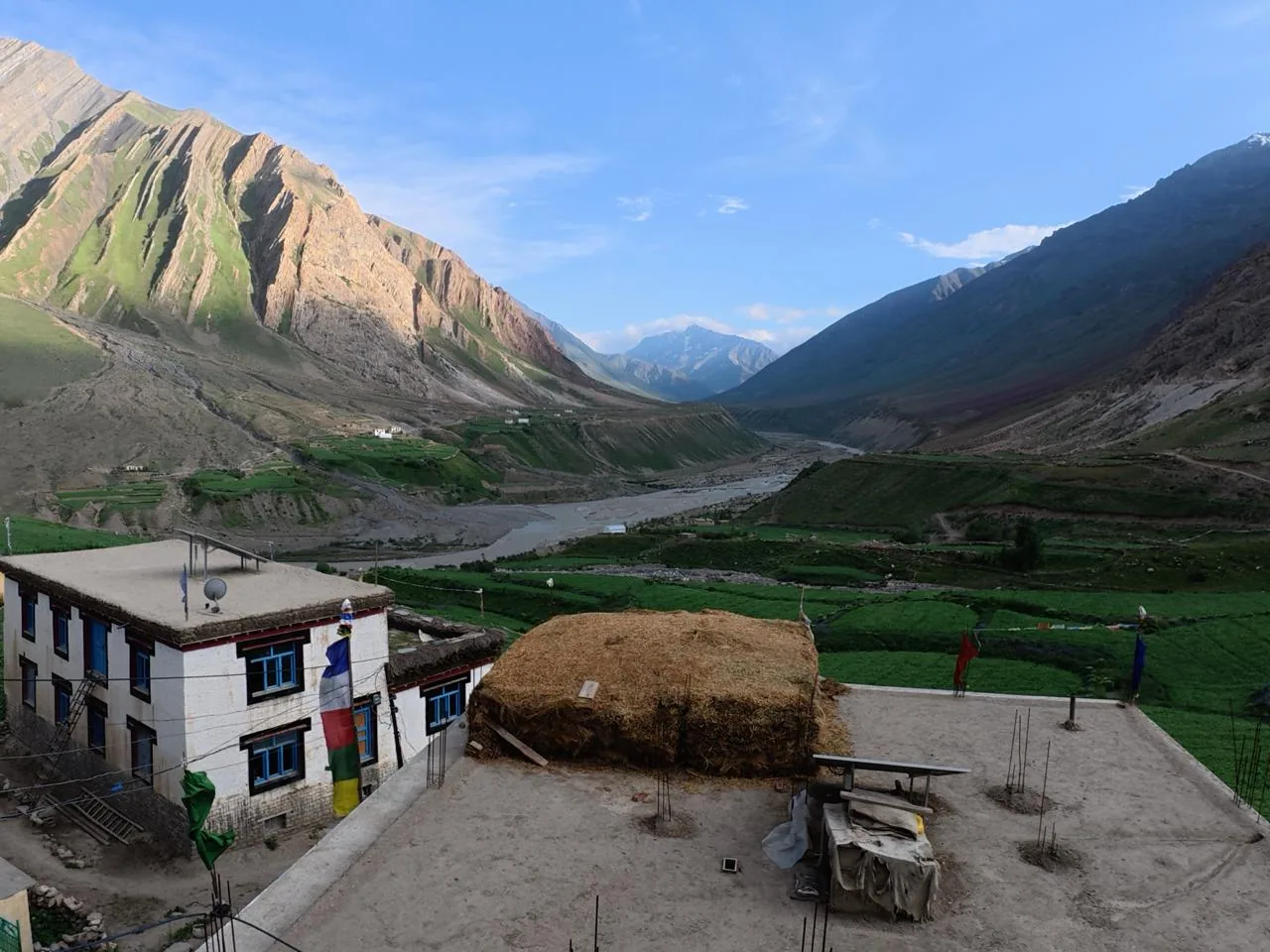
It is situated at an altitude of 3,800 meters approximately in Himachal, Mudh Village also spelled Mud or Mudh is last inhabited village of the scenic Pin Valley. It is located about 50 km from Kaza. The village marks the end of the motorable road and it serves as the gateway to the famous Pin Valley National Park and it is the starting or ending point of high passes treks such as Pin Bhaba and Pin Parvati Pass. And it is surrounded by dry and barren high peaks, glacial streams, and fertile green fields. Mudh is one of the most picturesque villages in the Spiti region.
Trek Diaries
Mudh Village in Pin Valley, Spiti Region
Geography and Landscape of Mudh Village
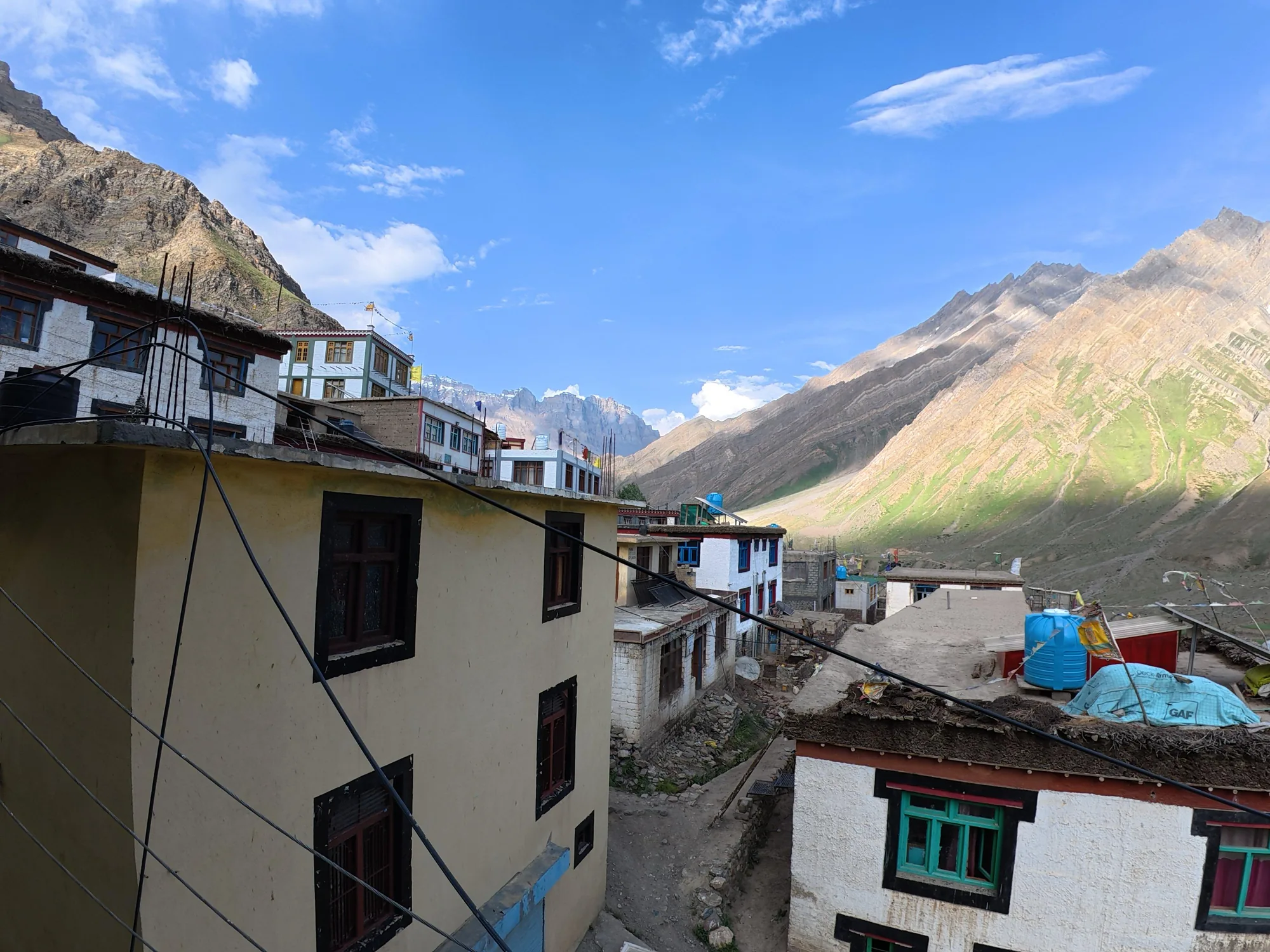
The Pin Valley is on edge of Spiti region which is connected with Kinnaur and Kullu region. So Pin Valley surprisingly lush during summer. It is here due to the perennial flow of the Pin River and so many glacial melt streams.
Geographically, it is in Trans Himalayas region, within the Zanskar Range of Himachal Pradesh making it a crucial part of Great Himalaya Trail.
The Mudh village is surrounded by rugged dry high mountains. These mountains give wide view of Valley. The rocks of mountains are very colorful.
The rocks in Spiti are sedimentary, and that’s one of the reasons the region is famous among geoglogist and fossil hunters.
The most common sedimentary rocks found in Spiti include:
-
Limestone
-
Shale
-
Sandstone
-
Dolomite
Culture and Traditions of Mudh Village
The culture and traditions of Mudh Village is very far different from states of India. The poeple of this village more follow to the Tibetan Buddhism. There is ancient monastery which the spiritual center of village. Here is the daily life depends in agriculture, and seasonal tourism. Here you will see Tibetan flags fluttering on the mountains and rooftop.
Festivals such as Losar which means Tibetan New year, crops harvest celebration and religious ceremonies are celebrated here with masked dances, traditionsl music, prayer and community gathering.
Hospitality is deeply rooted in the local culture, and visitors staying in homestays expericnces authentic Spitian cuisine and warm Himalayan hospitality.
Climate of Mudh Village
Mudh experience a climate according to its cold desert. Here the winter remains long which is very harsh and pleasant summer period remains shorter.
-
Summer(June to September): Temperatures range from 10 degree celsius to 20 degree celsius, which is best time to visit it.
-
Autumn(September to October): The skies are very clear and weather is cool and fields turns into golden color. During this temperature starts dropping.
-
Winter(November to April): At Mudh winter period is very long. Village experience heavy snowfall and temperature drops below -20 degree celsius. During this time many tourist come to see snow leopard.
Agriculture of Mudh Village
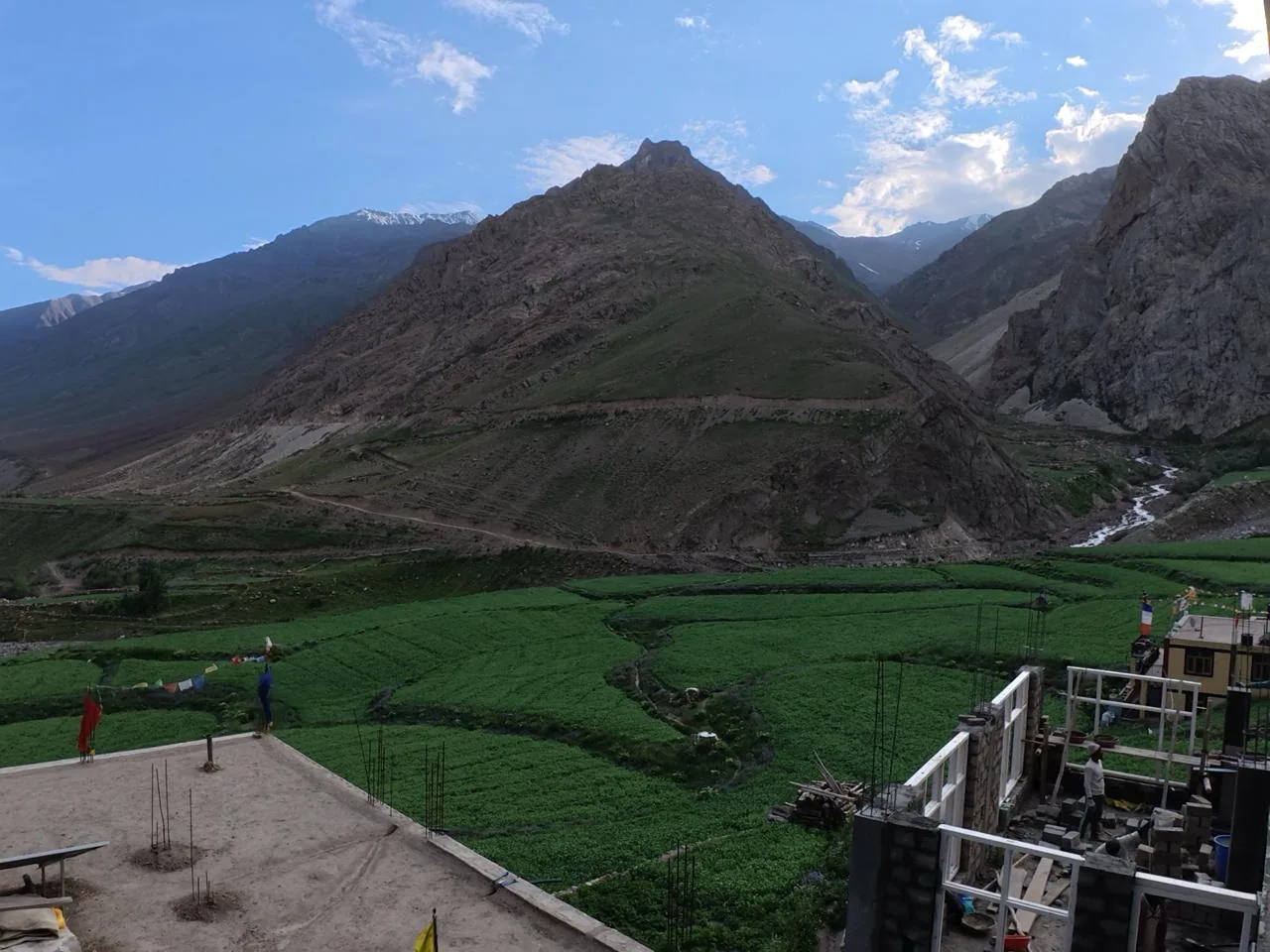
Agriculture is very important part for village economy. But the village have short period for growing crops of only four to five months. Here some crops cultivate. But it is growing at very high altitude. Some crops of here sells in good price in market such as
-
Barley
-
Green Peas
-
Potatoes
-
Buckwheat
-
Mustard
During summer, villagers also collect fodder for livestock such as yaks, sheeps, and horses to sustain them through the long winter.
Traditional House Architecture of Mudh Village
The houses of Mudh Village are designed according to the hars Himalaya climate. This houses mainly built from stone, mud and timber. They make thick walls that provide insulation against extreme cold. There house have flat roof which is commonly used for drying crops, storing fodder, and collecting sunlight during winter.
The almost homes are whitewashed with red or dark color wooden window frames, which is traditional Spitian architecture. These eco friendly houses are perfectly adapted to the cold desert environment.
Wildlife and Biodiversity of Mudh Village
Mudh lies inside the buffer zone of Pin Valley National Park. This is one of most important protected areas in the Indian Trans Himalaya. The park is home to rare wildlife including Snow Leopard, Himalayan Ibex, Bharal, Red Fox, Himalayan Wolf, and numerous alpine nirds.
Best Time to Visit Mudh Village
The best time to visit the Mudh Village is June to September. During this time the Spiti region weather remains very pleasant, skies remains open.
But if you want to see snow leopard then the best time is late January to Mid March. The Kibber, Mudh villages are the hotspot to see snow leopard during winter.
Conclusion
Mudh Village is one of the finest examples of the unique culture, architecture, and natural beauty of Trans Himalayan Region. From its traditional mud and stone houses and Buddhist heritage to its fertile lands for farming and world class trekking route.